|
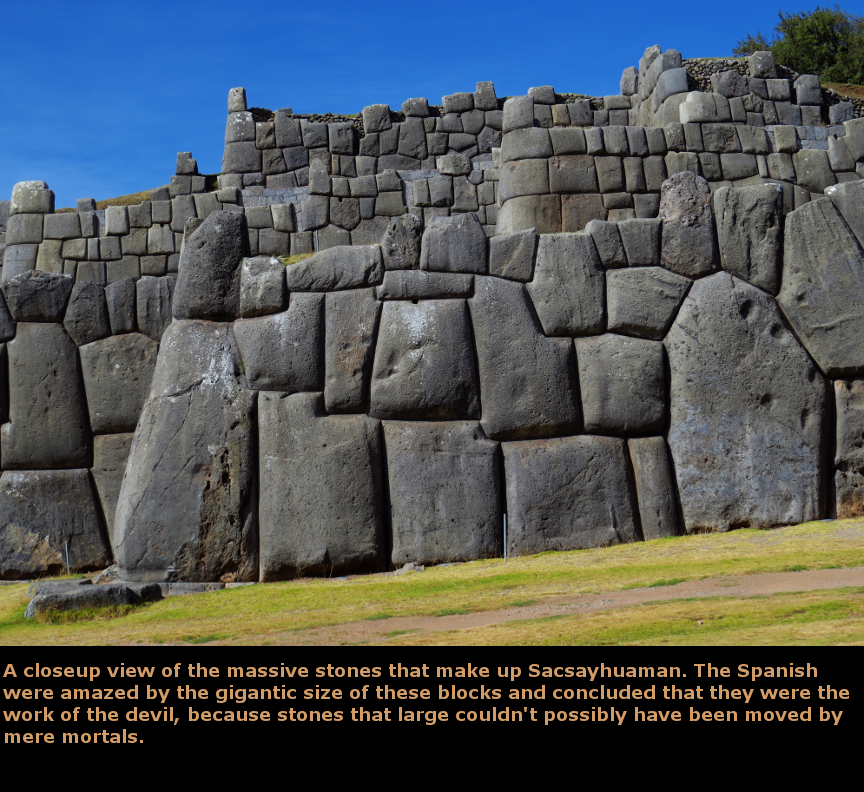
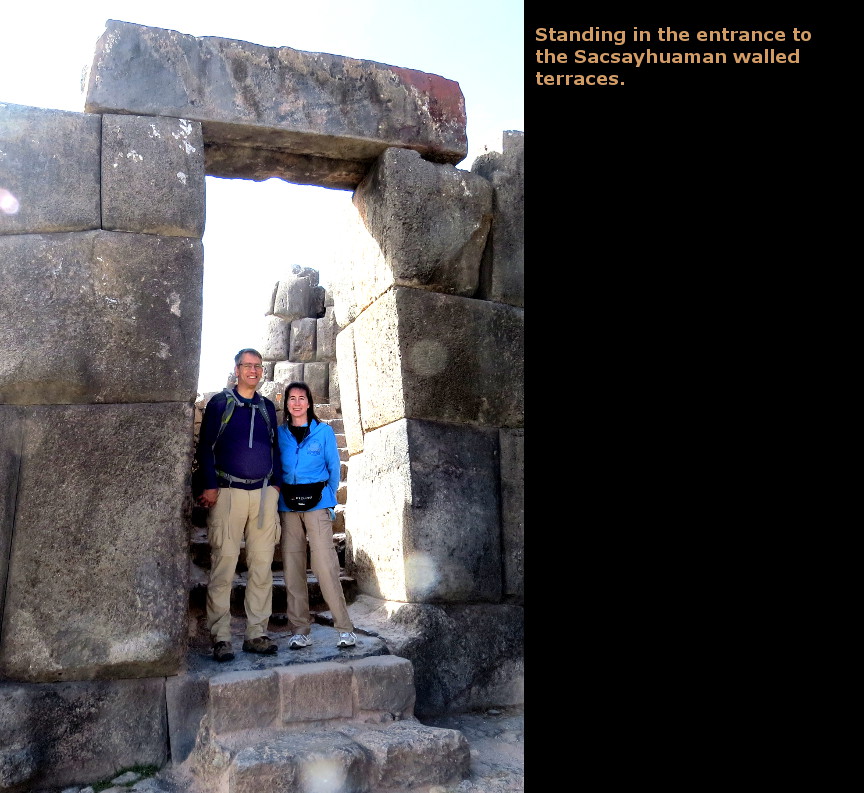
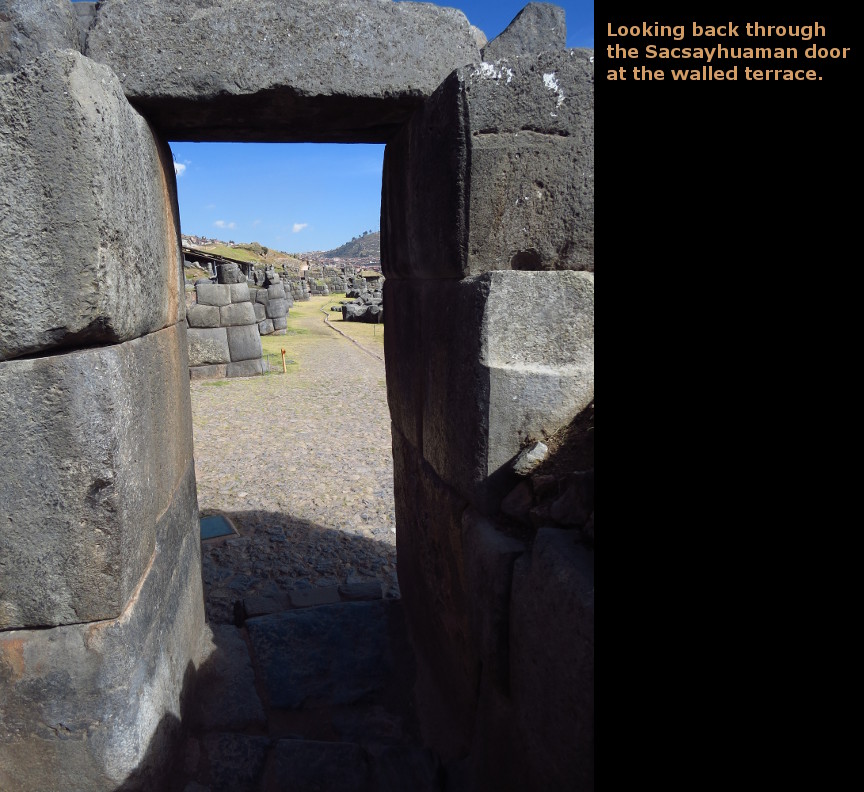
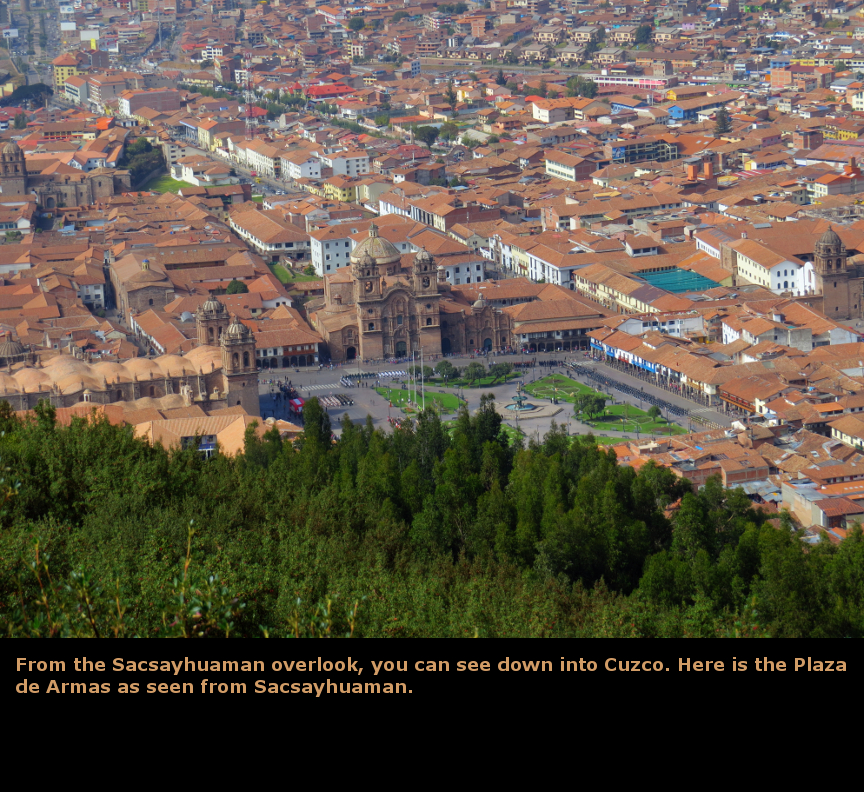
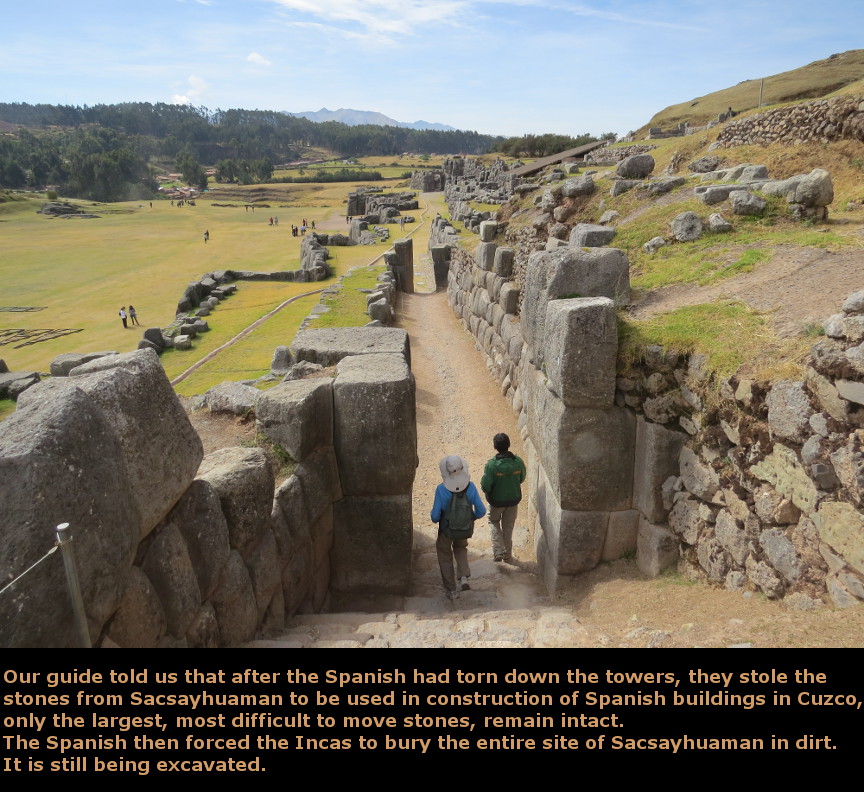
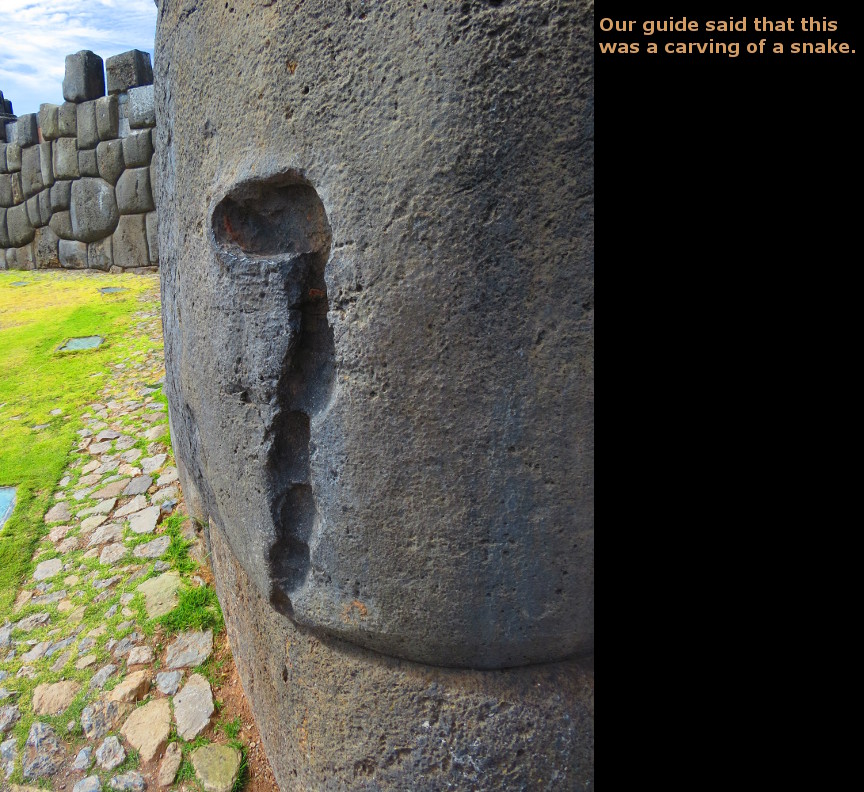
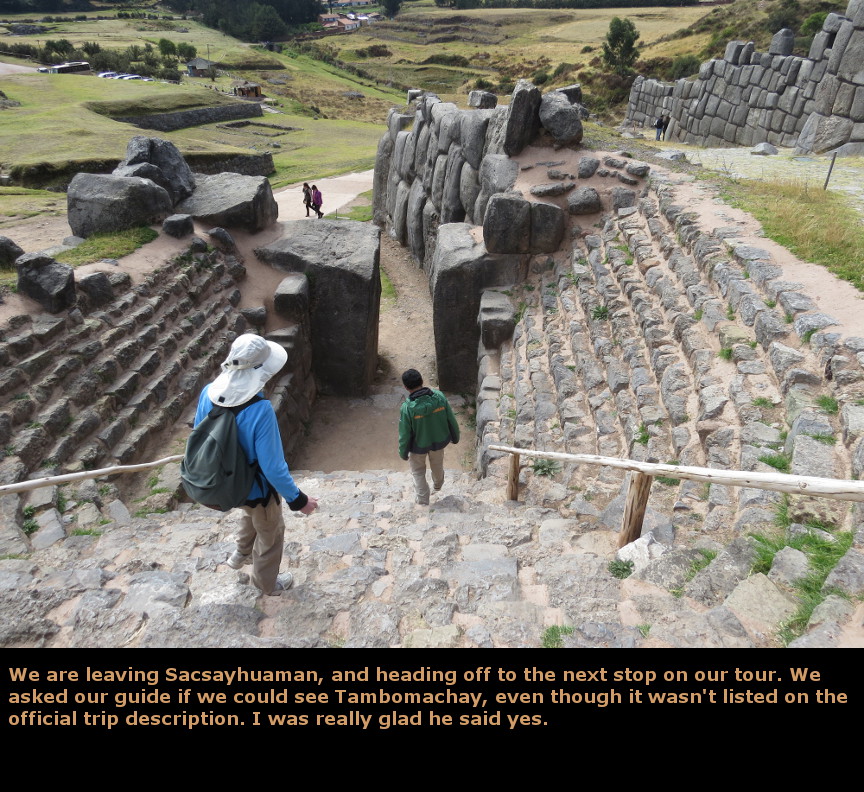
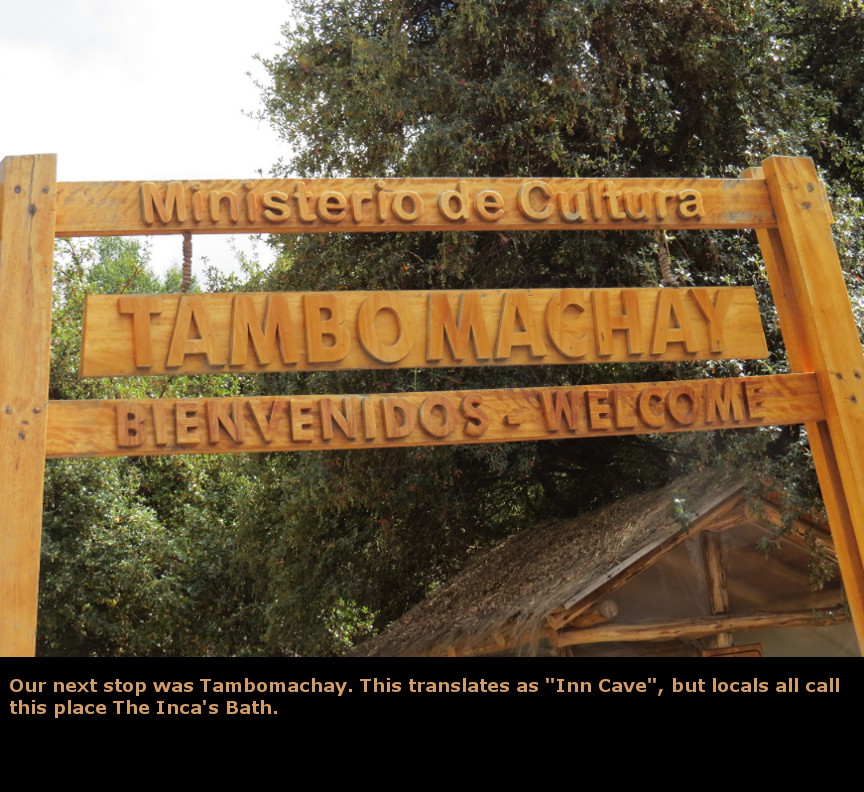
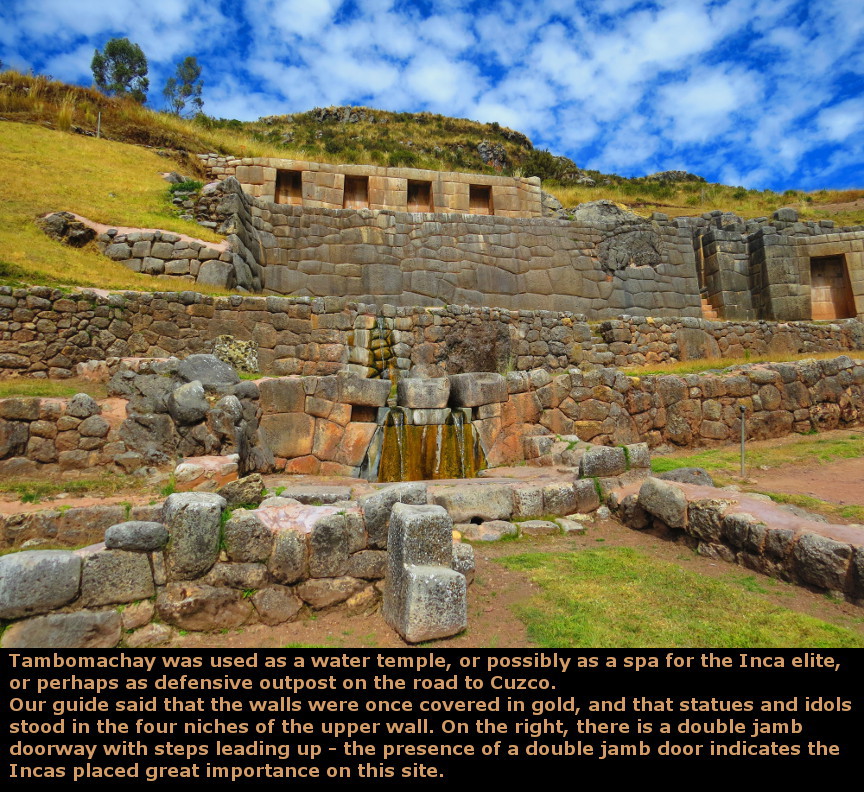
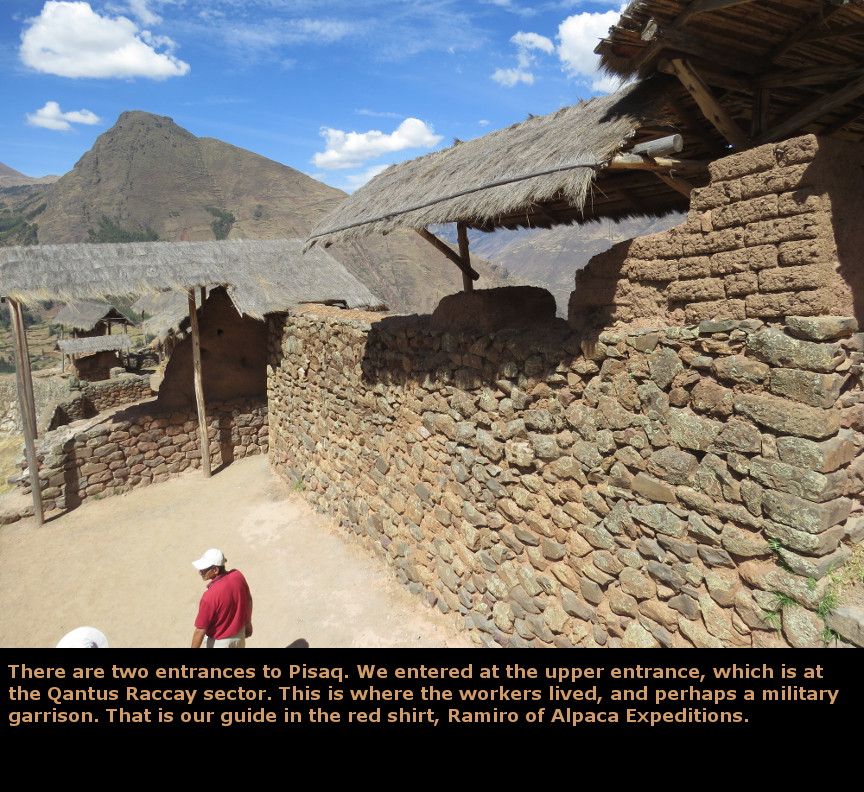
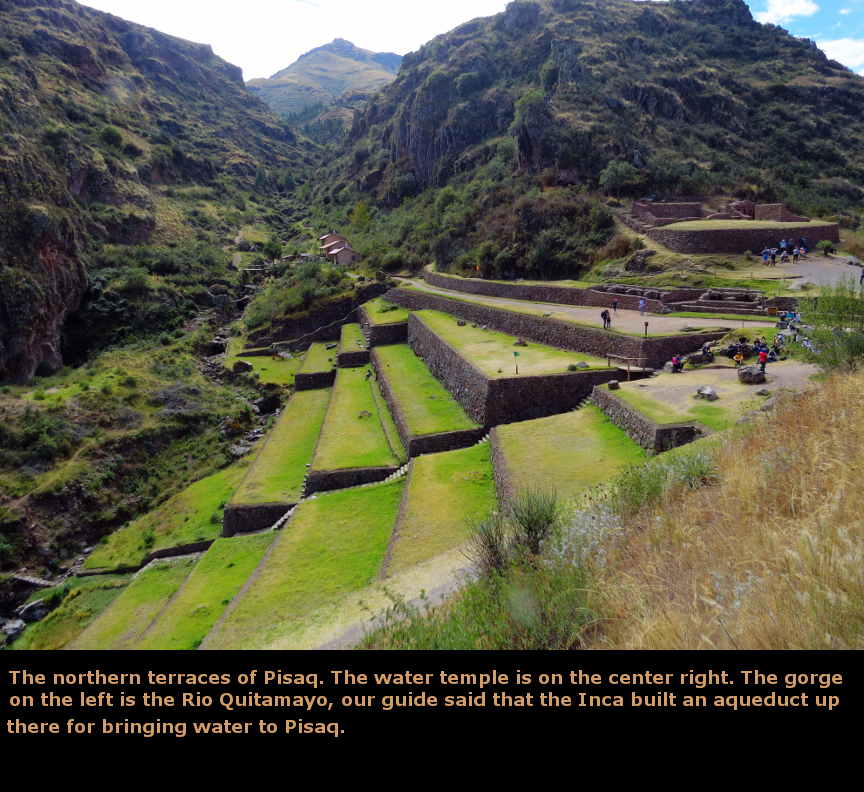
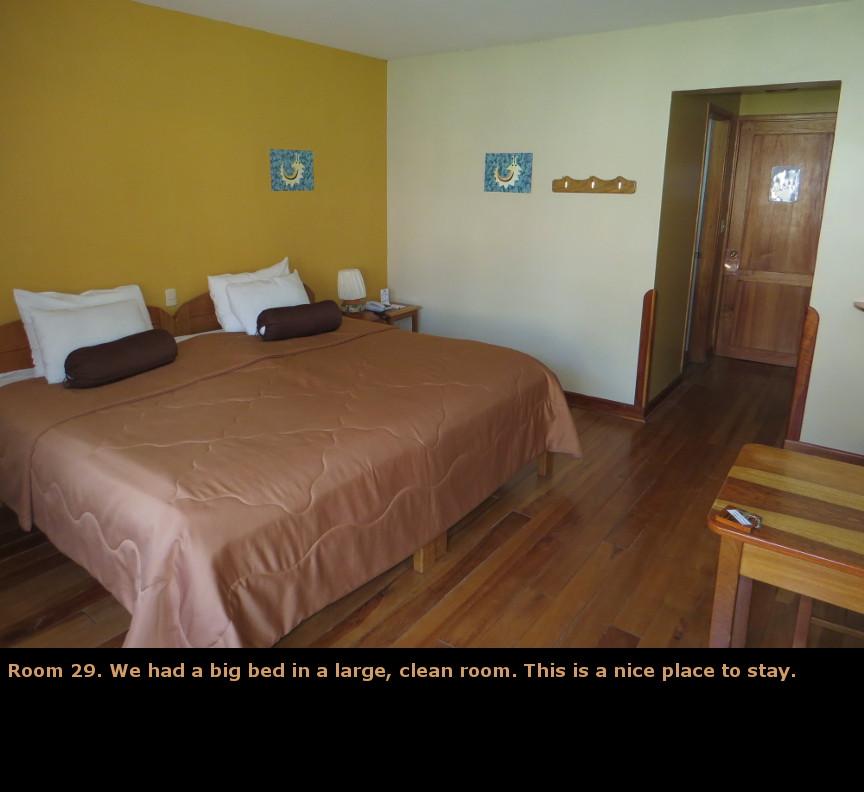
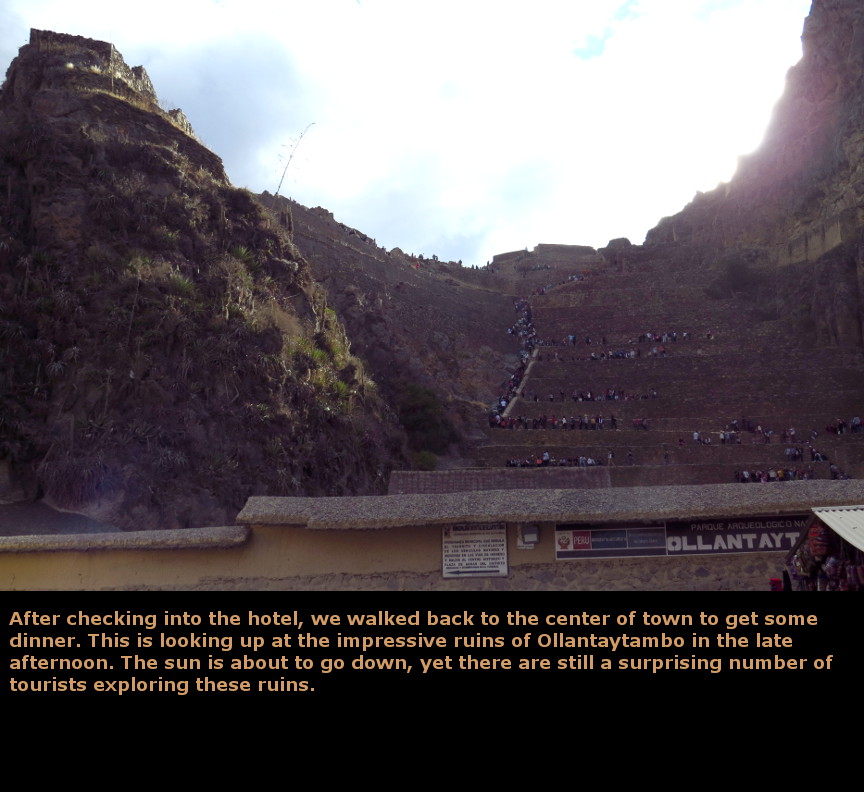
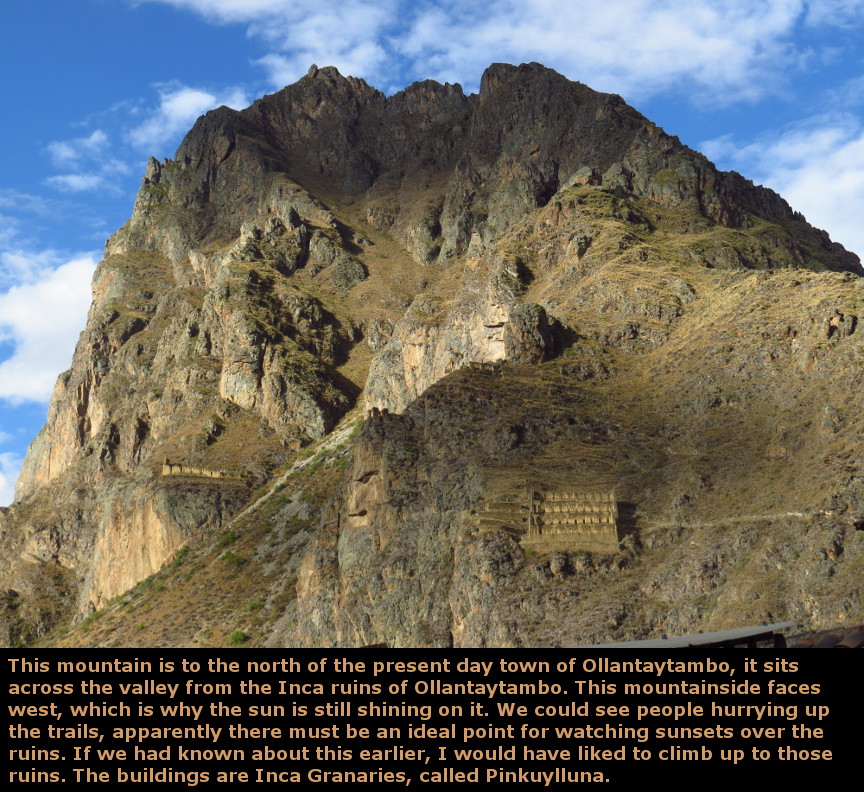
Our guide, Ramiro, from Alpaca Expeditions, met us at our hotel in the morning. When the driver showed up, we headed out to Sacsayhuaman. As we drove through the morning traffic of Cuzco, I was once again glad that I had not rented a vehicle to try and drive ourselves around in Peru. The Inca site of Sacsayhuaman is located above the city of Cuzco. Indeed, you could walk right up to it, if you have the endurance to climb the steep trail - the Christ statue on the mountainside that is visible from Cuzco is standing right next to Sacsayhuaman. During the time of the Inca, Sacsayhuaman was "Upper Cuzco" - it was considered part of the city, and it served an important religious function. The Inca thought that the city of Cuzco was laid out in the shape of a puma (a sacred animal), and that Sacsayhuaman was the head of the puma. There once stood three tall towers, covered in gold in the center of Sacsayhuaman - these were considered the eye of the cat. The zigzag shape of the massive walls at Sacsayhuaman were meant to represent the teeth of the puma. The best reason to visit Sacsayhuaman (which apparently is a Quecha word for "satisfied falcon") is to see the enormous stones that were used to build the walls. Some of the stones weigh over 200 tons, and were transported here from quarries over 30 km away. The masonry really is amazing, especially for a stone age culture. The stones are fitted together perfectly, it would be nice to know exactly how the Inca manage to shape these stones so precisely. Having a guide explain the significance of Sacsayhuaman was great; there are no signs at the site to explain what you are looking at. We learned that the Spanish forced the natives to bury the entire site under dirt, so that they would forget the glories of their former Inca empire. He told us that astronomers used to sit at the top of the towers, looking into a large pool of still water that reflected the night sky, this way they could study the stars without straining their necks looking up all night. He pointed out a carving in the rock walls, in the shape of a serpent, which was another animal sacred to the Inca. The snake represents the underworld, or death. Our next stop was at Tambomachay. Tambomachay is a small Inca site, but well worth a visit. This is a pretty site, it consists of three streams of water spilling into lower basins. The Inca worshipped water, knowing how crucial it was to crops and life in general. The water temple has finely cut stones and niches where idols sat. Of course, the wall would have been covered in gold. We stopped for a short time at Awana Kancha. This is a tourist spot where the four different types of South American camel are stored in pens - the llama, the alpaca, the vicuna, and the guanaco. There are weavers here, with their wares for sale. The wool from the llamas and alpacas is stained with natural colors. Our guide showed us how the brilliant red dye comes from a tiny bug called a cochineal, which lives on cactus plants. When he crushed one in his hand, it made a brilliant red stain. Since we were not interested in shopping, we didn't linger long at Awana Kancha, and soon drove off to the site of Pisaq. Pisaq is an impressive place. The archaeologists have rebuilt the terraces below Pisaq, so you can how the site used to look. Then, when you look around the mountains of the Sacred Valley and see all the ruined terraces on the mountainsides, it is amazing to think of how the Urubamba valley must have looked in the time of the Inca. The Inca grew corn (over 150 different varities), potato (more than 400 different species) and quinoa grain (a good source of protein) crops on these terraces, but today there is only grass growing there. These terraces make for photogenic views with the Inca ruins above them. The Pisaq ruins are impressive. There are several sectors - all built on top of a strategic mountain above the Urubamba river. There is an astronomer sector, a workshop area, and a residential area for the elites. Unfortunately, the trails through the Inca tunnels to the elite area were closed when we visited. There is a cliffside that is riddled with Inca tombs, but visitors are not permitted to visit that area. We entered Pisaq through the upper entrance, but apparently there is a second entry point down in the modern town of Pisaq. This lower access point allows visitors to see other parts of the Pisaq ruins, I wish we would have had time to explore this further. After our Pisaq visit, they took us down to the present day town of Pisaq, which has a large market - a huge array of stalls where vendors were selling all kinds of touristy items. But we were interested in buying, so we walked through it once and then returned to the driver and guide who were waiting at the car. We drove on to Ollantaytambo. This is the site of an impressive Inca ruin, because it was late in the afternoon, our guide decided that we would not visit there until the next morning, our second day of the Sacred Valley tour. So we checked into our hotel, and then went out for a pizza at dinner. Hotel Pakaritampu was a nice place, but what I really liked about it was the ancient Inca terraces that still stand on the back of the property. You can walk up the steps to three levels, and at the top you can look to the west and see Mount Veronica and Ollantaytambo. We went out there in the evening, (since Peru is so close to the equator, the night sky was completely dark by 7:30 PM), and stood up there to look at the night sky. We couldn't see to the west, because of the glare of lights from the nearby train station, but looking to the east we had a great view of the night sky. It was dark enough to see the Milky Way. We saw the constellation Scorpius and the planet Mars. There are some tall mountains to the south and north, so we didn't get a 360 degree night sky view, but the piece of the night sky that we did see was pretty spectacular. Panorama Photos

MapsHere is a tourist map of Sacred Valley provided by Alpaca Expeditions. On our first day, we visited Sacsayhuaman, Tambomachay, the llama pens at Awana Cancha, and the ruins at Pisaq. We spent the night at Ollantaytambo.
This photo shows the trails around the upper portion of the Pisaq complex. We walked on all of the green trails, the red paths are closed.
This photo shows the lower half of the Pisaq ruins. You can see that there are numerous green (accessible) trails. I wish I had known that we could visit the lower half of Pisaq as well as the upper half, there is a lot of interesting ruins in the lower sector.
VideosIf you do not see the videos, but instead see a message that says: "Error: Video playback aborted" it is possible that the content is being blocked by your web browser. You may see a message at the top or bottom of your page that says "restricted webpage from running scripts or ActiveX controls". If you see that message, click on the ALLOW BLOCKED CONTENT box and that should allow these videos to run.
To display the photo images on this webpage, I am using a freely distributed java script called Lightbox v2.7.1 written by Lokesh Dhakar. You can download this program by clicking on this link. All the text and photographs on this webpage are my own creation, but the textured background is taken from a site, EOS development, that offers non-profit users free use of their graphics. Click the icon below to visit their site.
|
Click on any thumbnail to begin the slide show at that photograph Day 3 Photos
















|