The rain stopped today, so we took this opportunity to spend our last full day in New Zealand visiting the southern half of the Coromandel Peninsula. My original plan was to hike the scenic Coromandel Walkway, located at the very northern tip of the Coromandel Peninsula, but I learned that reaching the trailhead required driving 30 Km on unpaved road in each direction, which did not seem a good use of our rental car. Also, the hurricane from the previous year had wiped out a section of the Walkway trail, and so it wasn't possible hike to the entire length. So instead we explored the sights closer to Thames, on the eastern side of the peninsula.
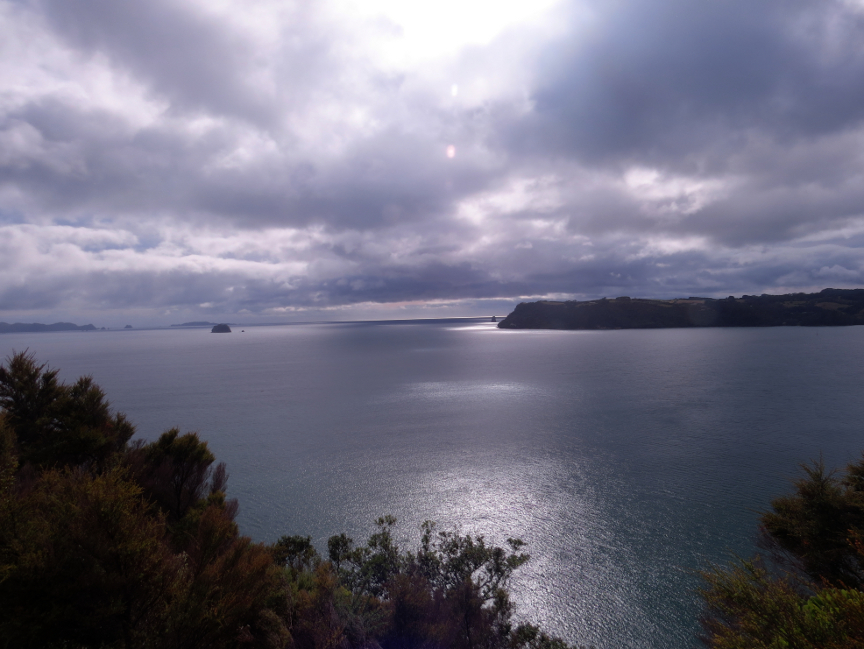
The first place we stopped was the Shakespeare Cliffs. This was a lookout that gave views over Mercury Bay and Cook's Cove. While we at the viewpoint, we met a fellow hiker who said he was from Mercer Island (a suburb of Seattle, where we live). He advised us to take the water taxi to Cathedral Cove - the hurricane had also washed away the overland hiking trail to Cathedral Cove so now it could only be reached by water.
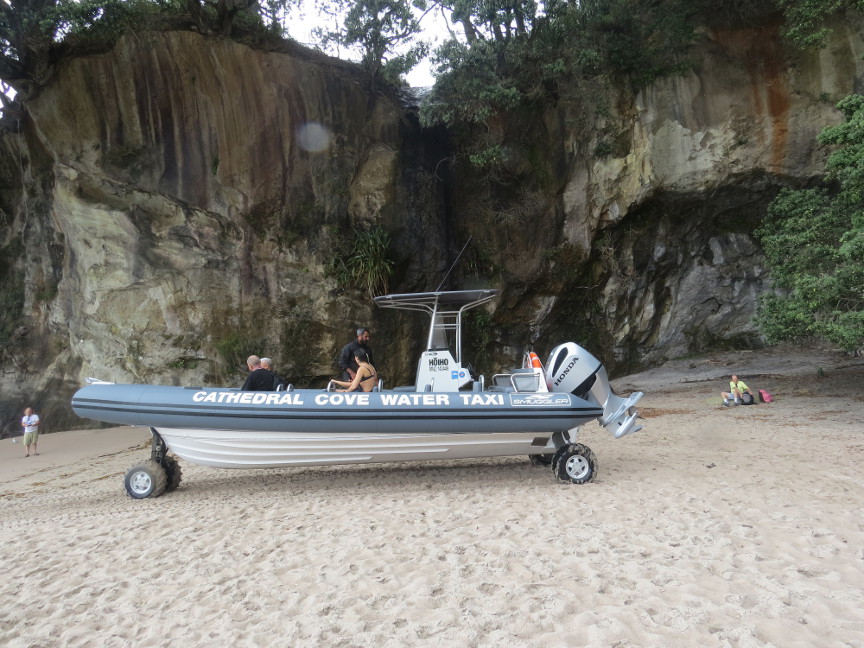
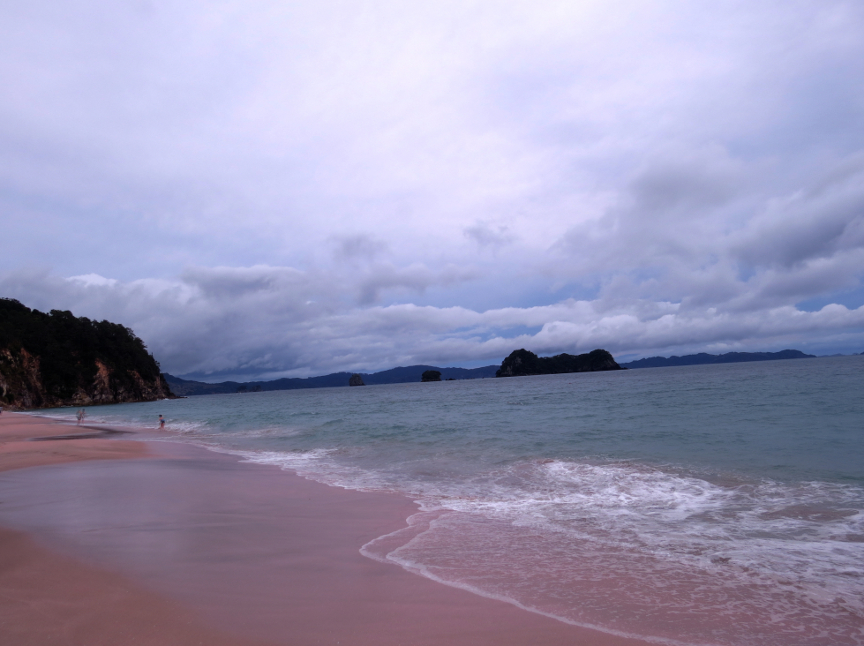
At Cathedral Cove, we signed up for the short water taxi ride from Hahei Beach. We rode a neat amphibious craft, that had retractable wheels beneath its hull. When on land, the wheels were down, like a plane landing on a runway. But at sea, the wheels folded up into the hull and the taxi proceeded like a boat.
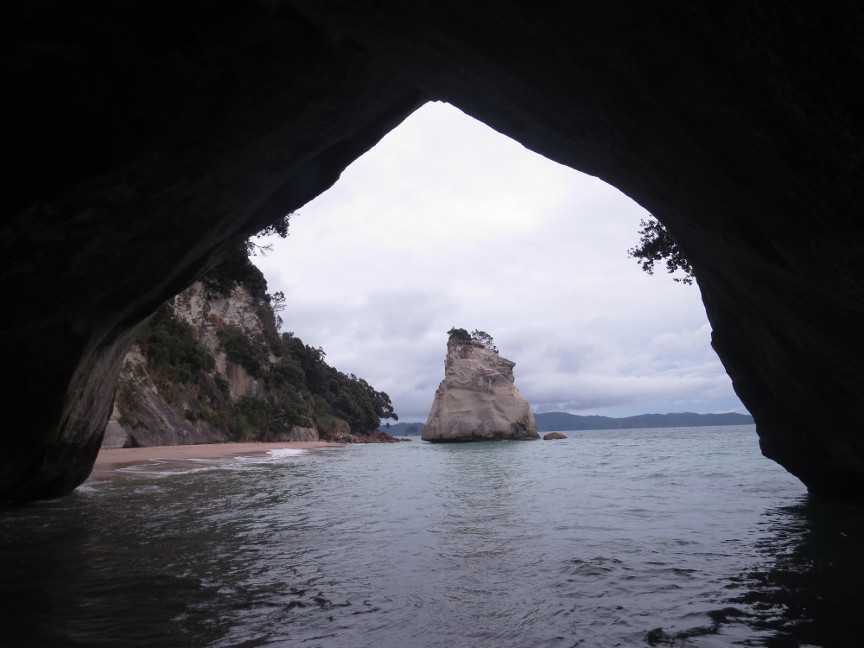
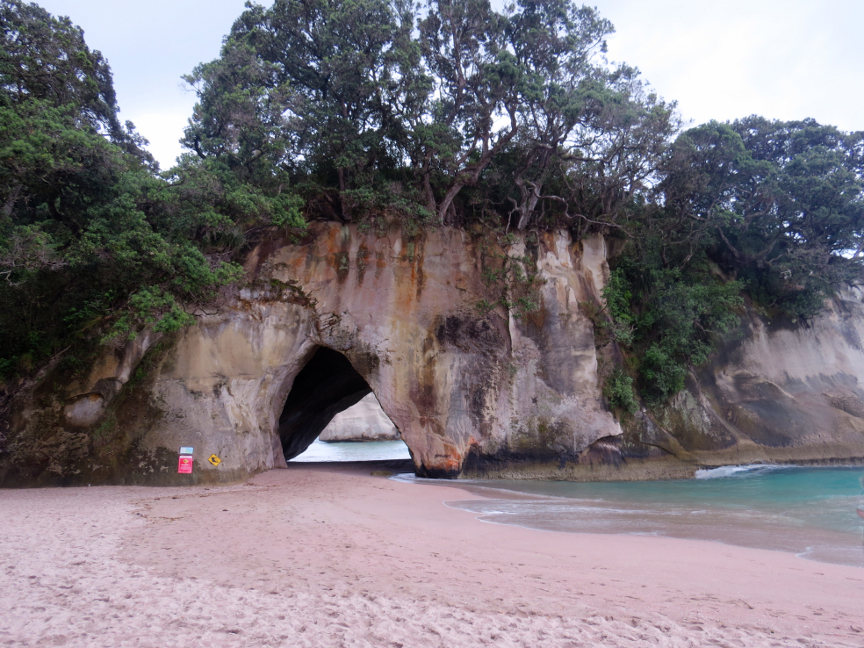
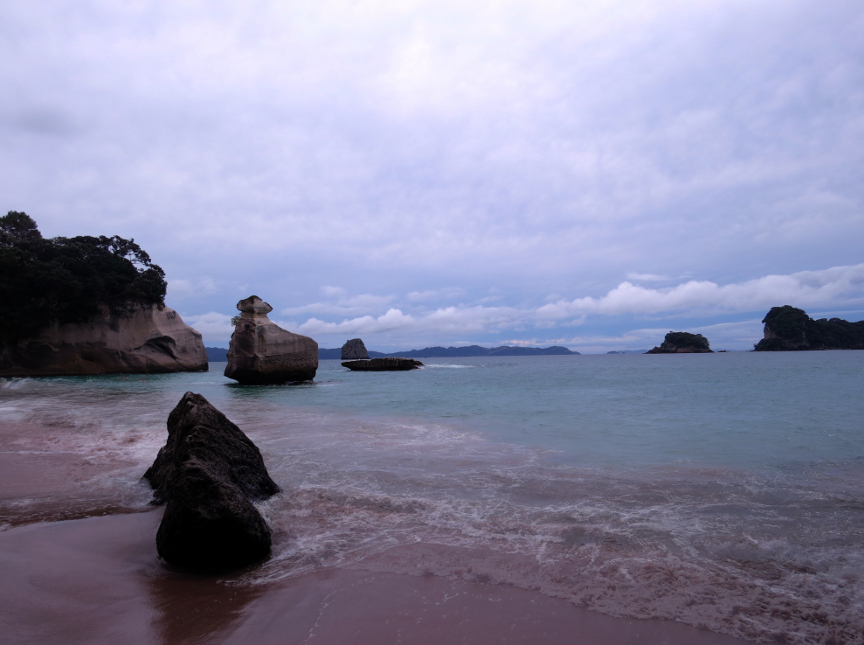
The big attraction at Cathedral Cove is a sea cave that goes through a cliff. At low tide, you can walk all the way through this cave to the beach on the farside to see Te Hoho Rock. We spent about an hour at the Cove before taking the five minute taxi ride back to the start.
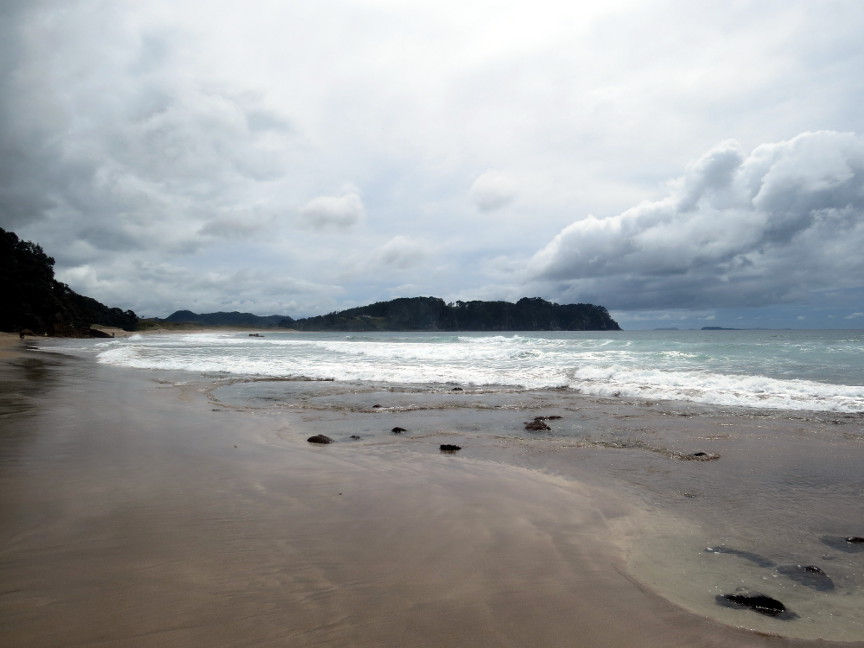
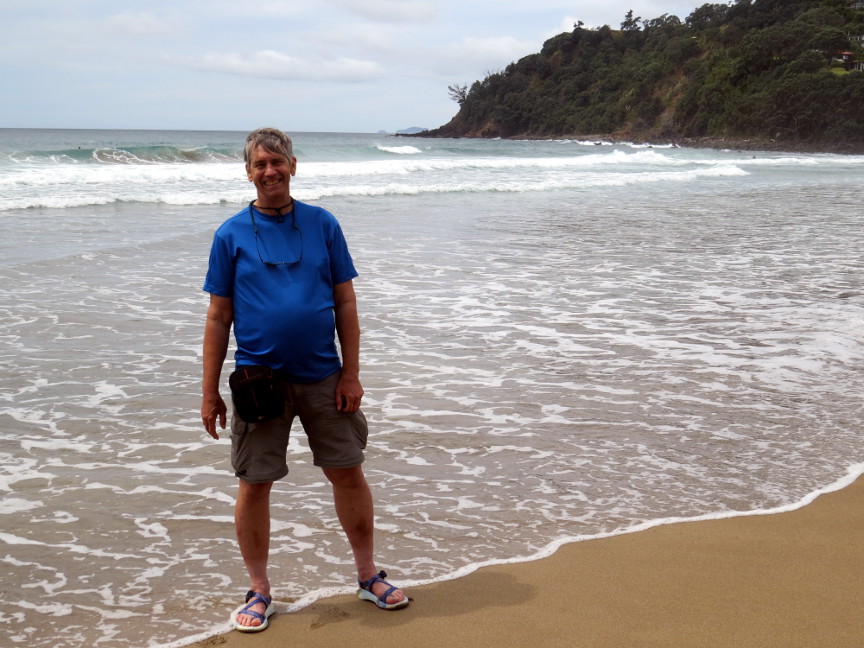
At Hot Water Beach, the water was cold. You are supposed to be able to dig down into the sand and find water warmed by geothermal activity. We did not do any digging ourselves, but did see excavations left by others - I stuck a toe into the water at the bottom, but it was cold. Perhaps the holes had been dug at the wrong spot. We watched surfers ride the waves at Hot Water Beach for a while.
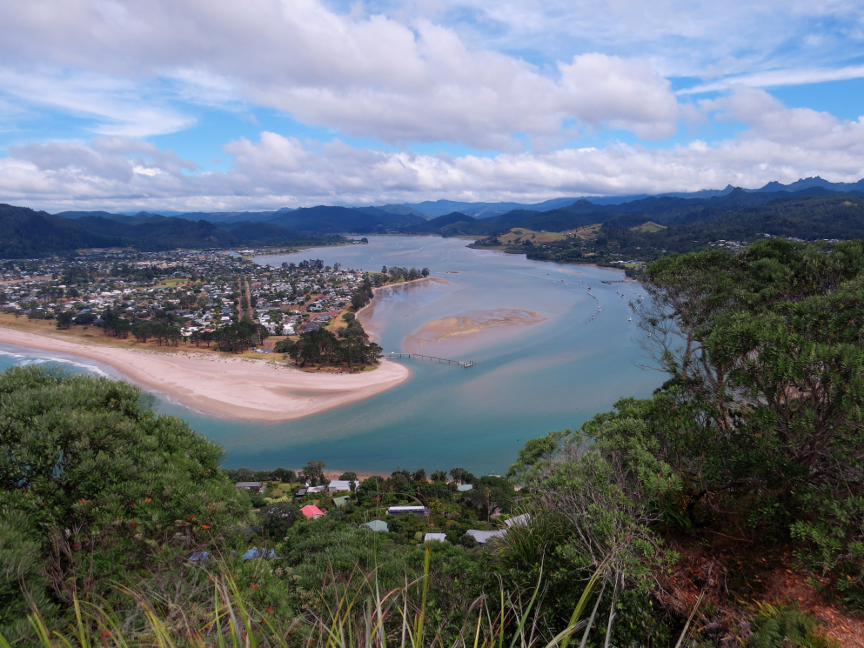
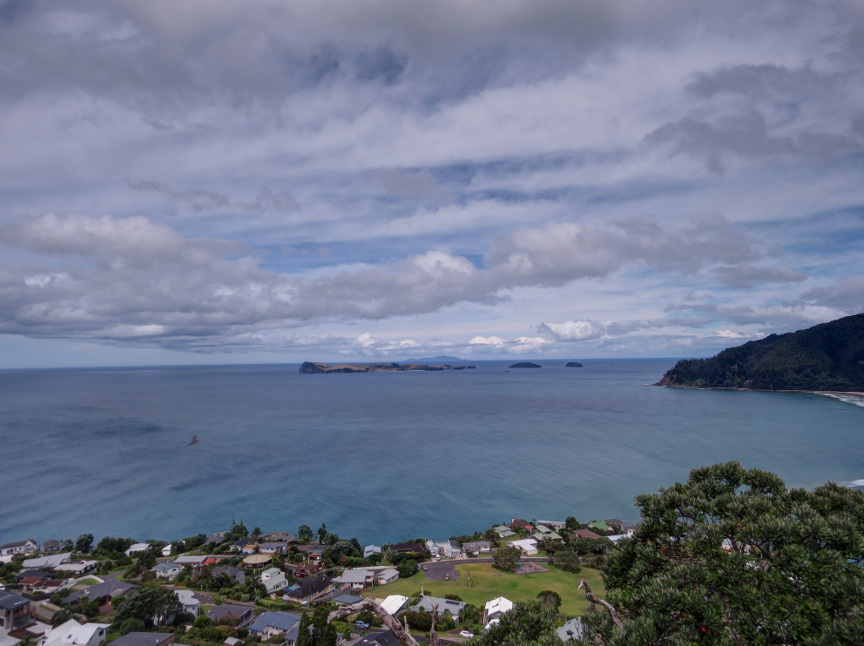
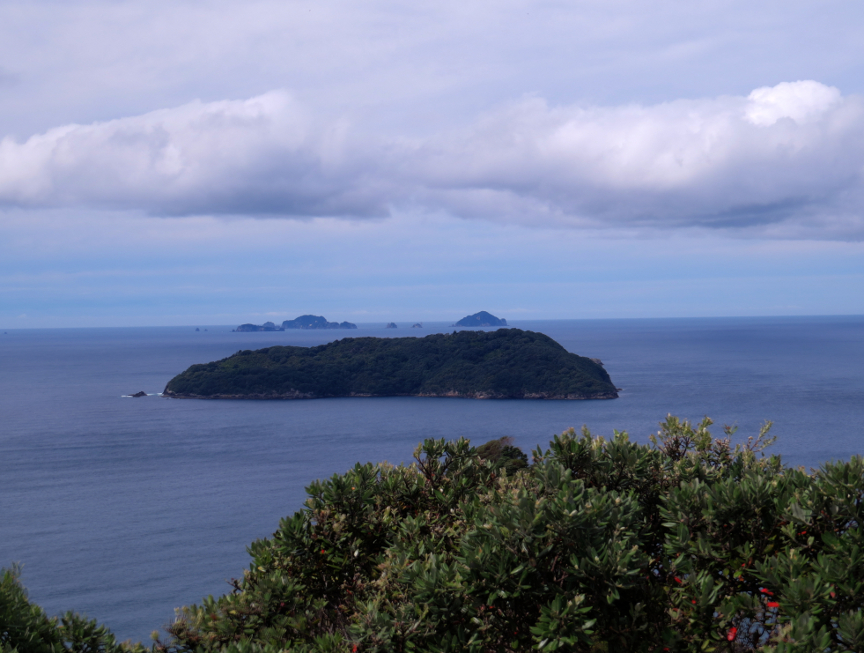
At Mt. Paku Hill, we climbed up to the summit on a short hike. Paku originally was a volcanic island, formed 7 to 8 million years ago from an explosive eruption of ash and pumice. A second eruption allowed lava to be extruded - the lava plugged the volcano vent. Subsequent erosion removed much of the volcanic cone, Mt Paku Hill is actually the eroded rim of the volcanic cone.
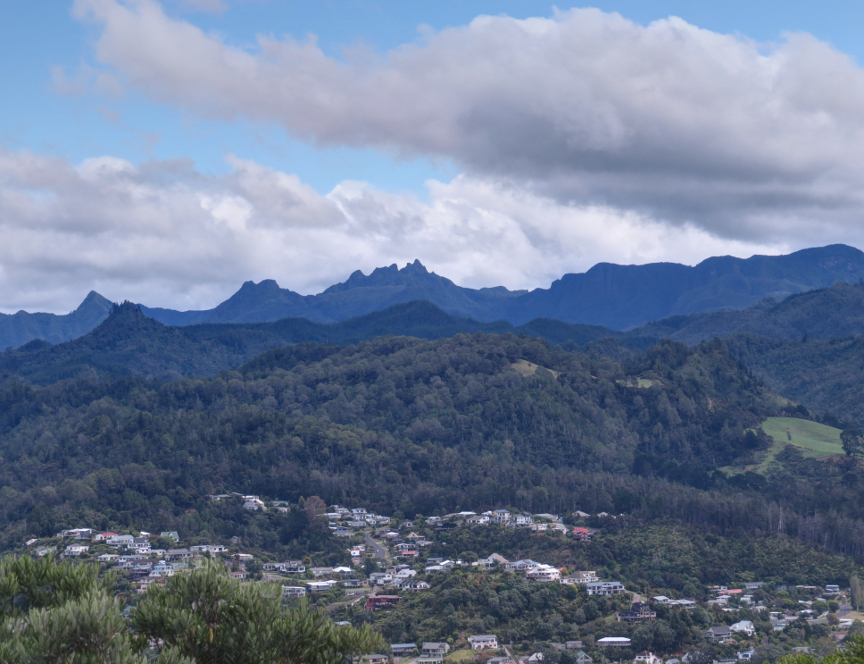
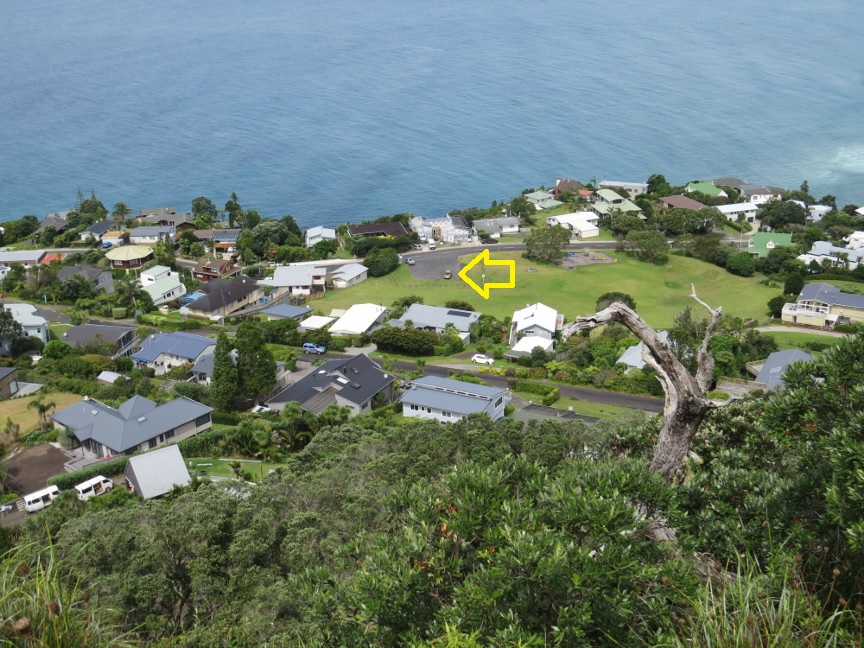
The summit of Mt. Paku Hill provides an excellent 360 degree view of the landscape (and oceanscape). We had a clear day and could see in all directions.
We drove the winding twisty road back across the Coromandel Peninsula to our lodge at Thames and started packing for our return to the States.