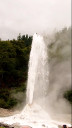
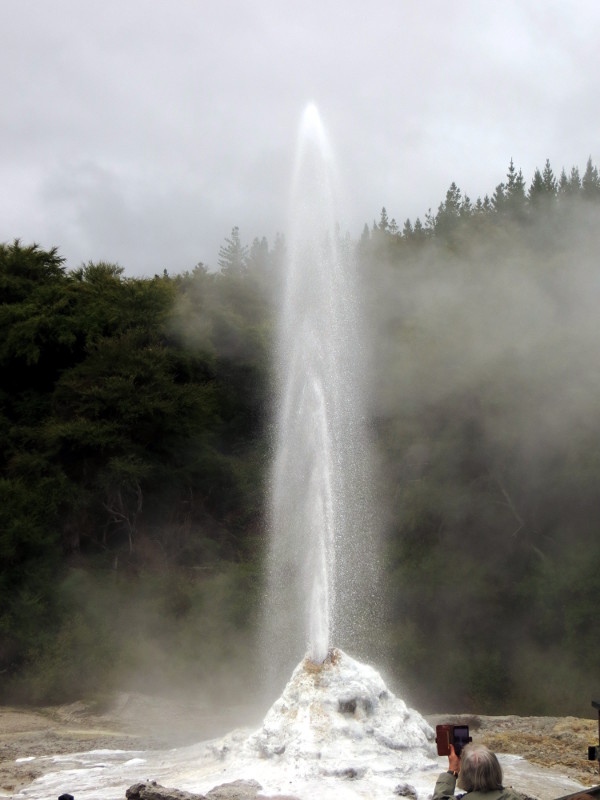
Because I had kept the receipt from our admission to Waio-Tapu Thermal Wonderland from the day before, we were able to return this morning to watch the eruption of the Lady Knox geyser without having to pay for entrance a second time - I just showed the receipt and they let us drive in along with all of the other visitors who came to watch the geyser, scheduled for 10:30 AM every day.
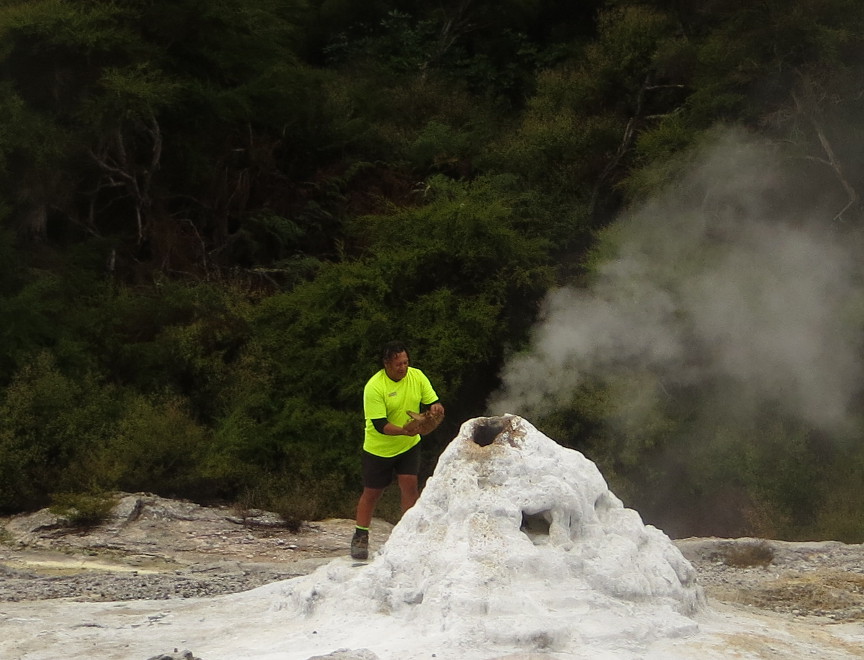
The Lady Knox geyser went off precisely at 10:30 AM each day because its eruptions are induced. A staff member of Waio-Tapu walks up to the geyser cone and dumps soap into the mouth, this reduces the surface tension of the cold water in the upper chamber of the geyser, which allows it to mix wit the hot water below, and moments later the geyser shoots up. The geyser is neat to see, but it made me appreciate even more how special Yellowstone is - the geysers there go off naturally and unpredictably. In New Zealand, geothermal projects and construction ruined the dynamics that caused the geysers to go off naturally. Once there were hundreds of geysers in New Zealand.
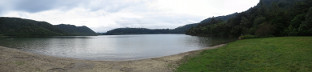
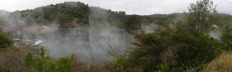
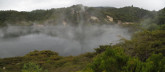
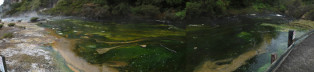
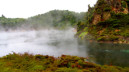
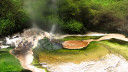
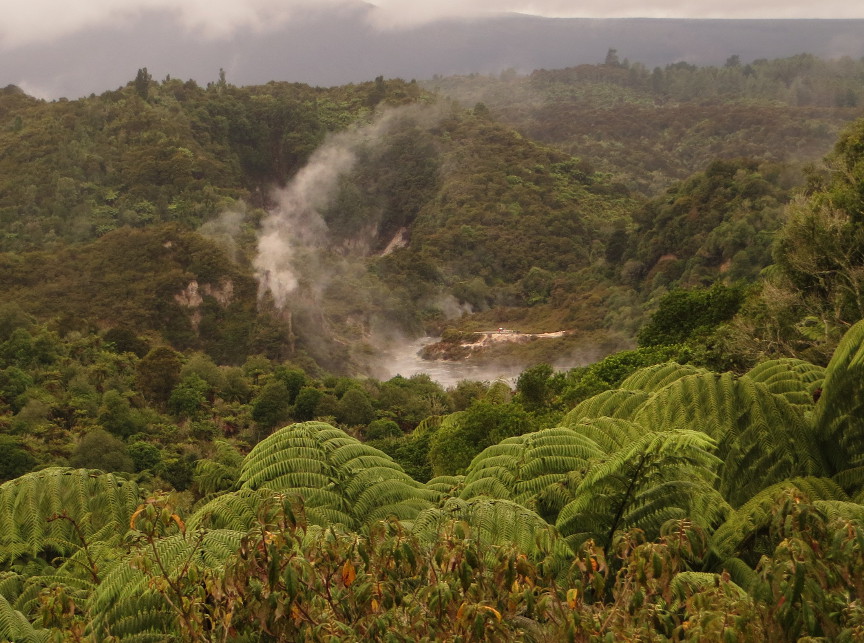
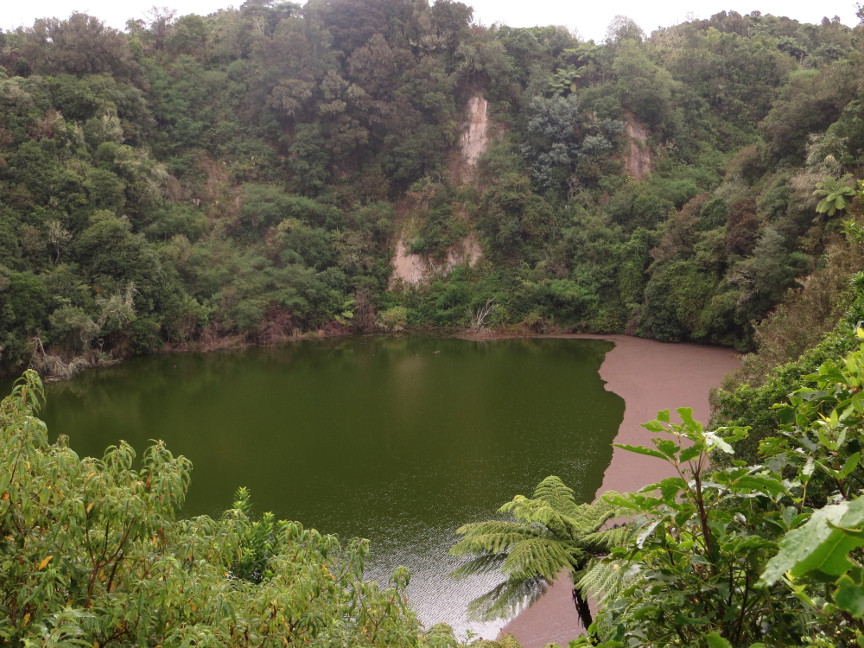
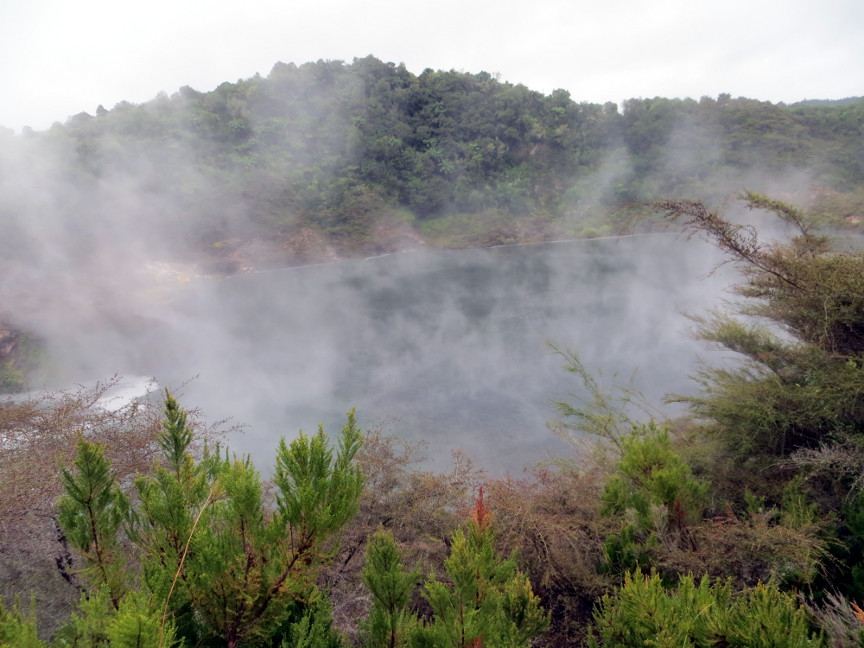
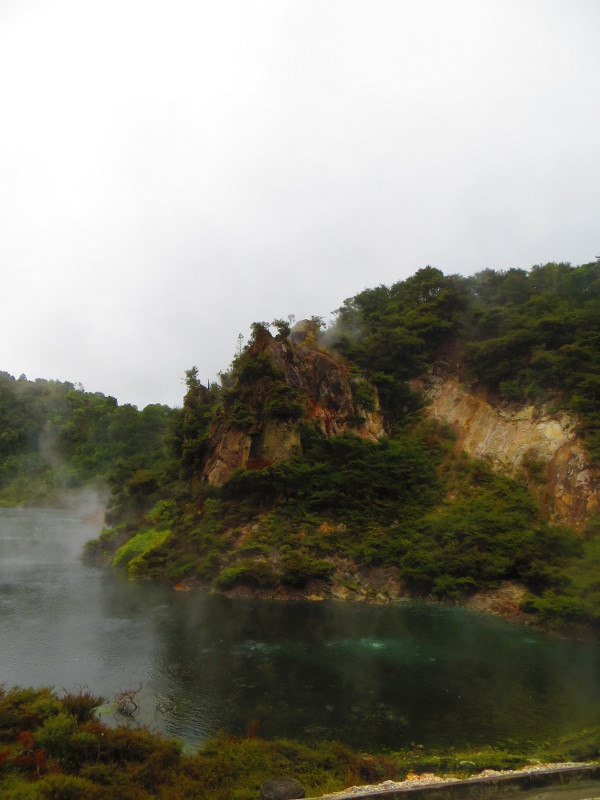
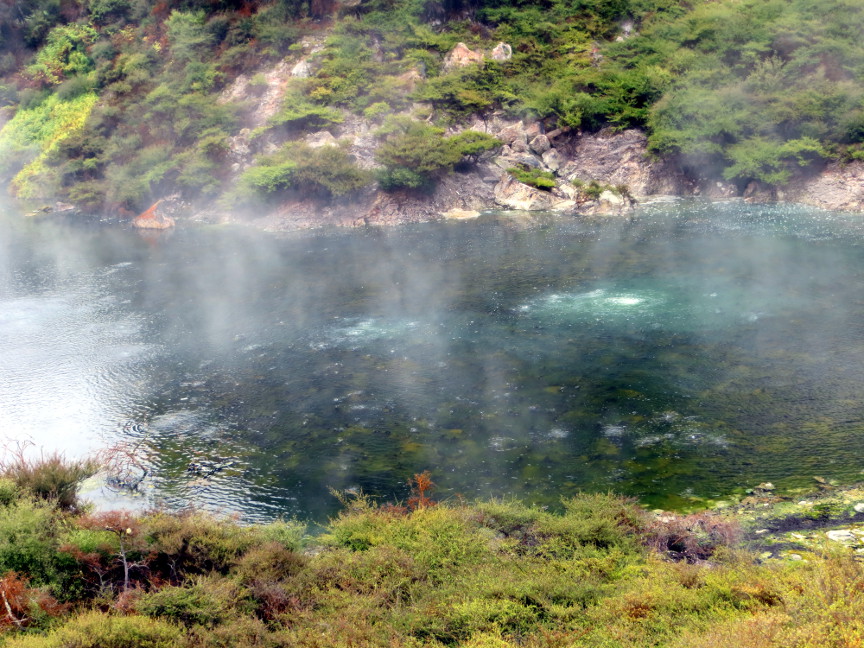
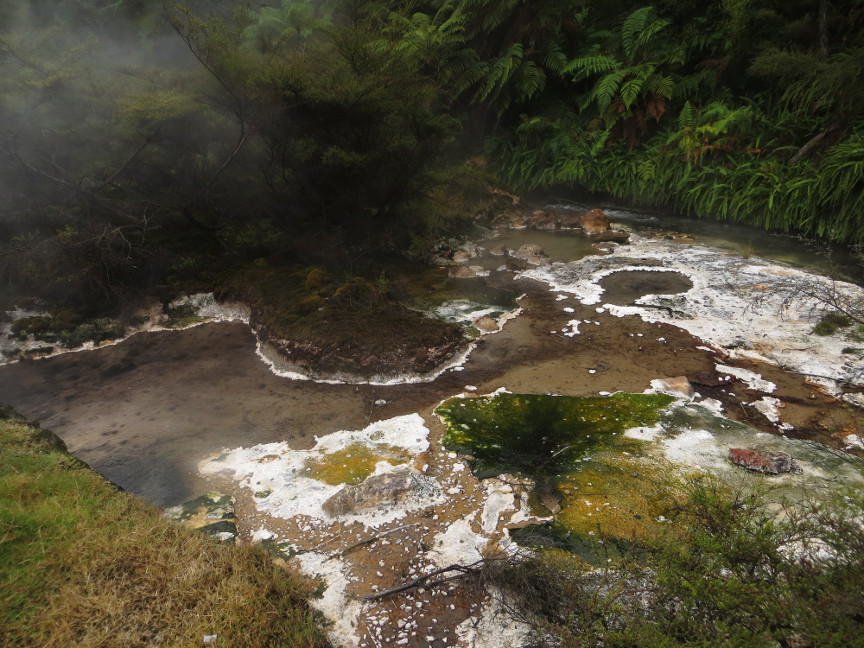
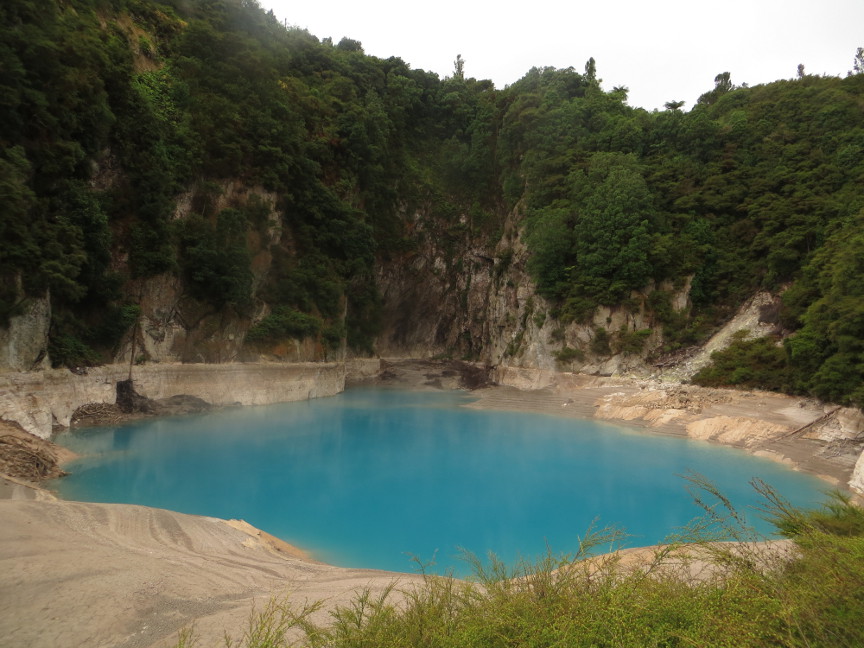
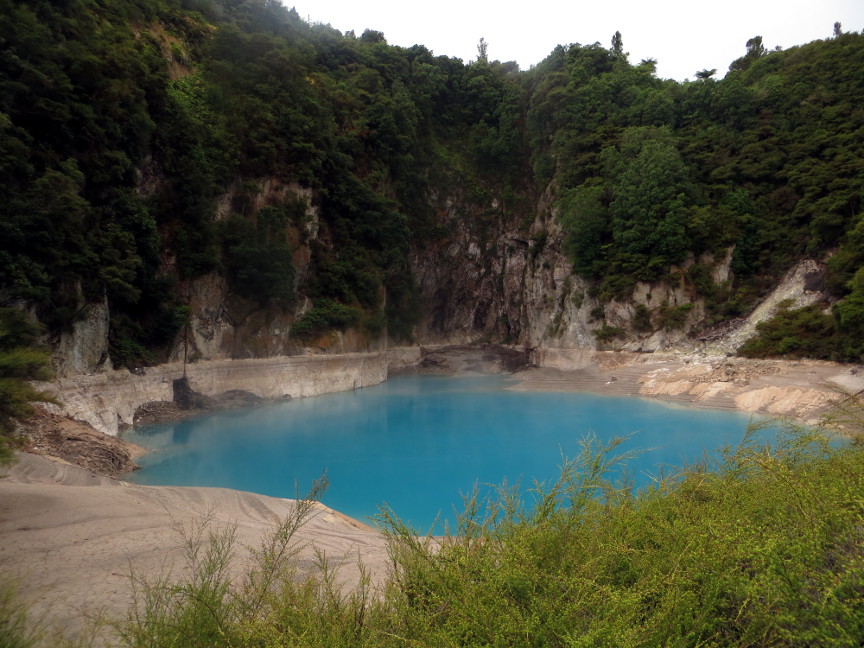
After witnessing the Lady Knox eruption, we drove to nearby Waimangu Volcano Valley, another geothermal park. We again saw steaming pools, craters from previous eruptions, colored algae growth and other unusual geothermal wonders. The highlight of Waimangu is the intriguing Inferno Crater Lake. The water in the little lake is a brilliant blue color, quite pretty to see. The water level in the lake rises and falls over a slow five to seven week cycle, the change in the depth is as much as 24 meters. There is a geyser at the bottom of the lake, but its eruptions cannot be seen because of the lake water. There is an underground connection between Frying Pan Lake and Inferno Crater Lake.
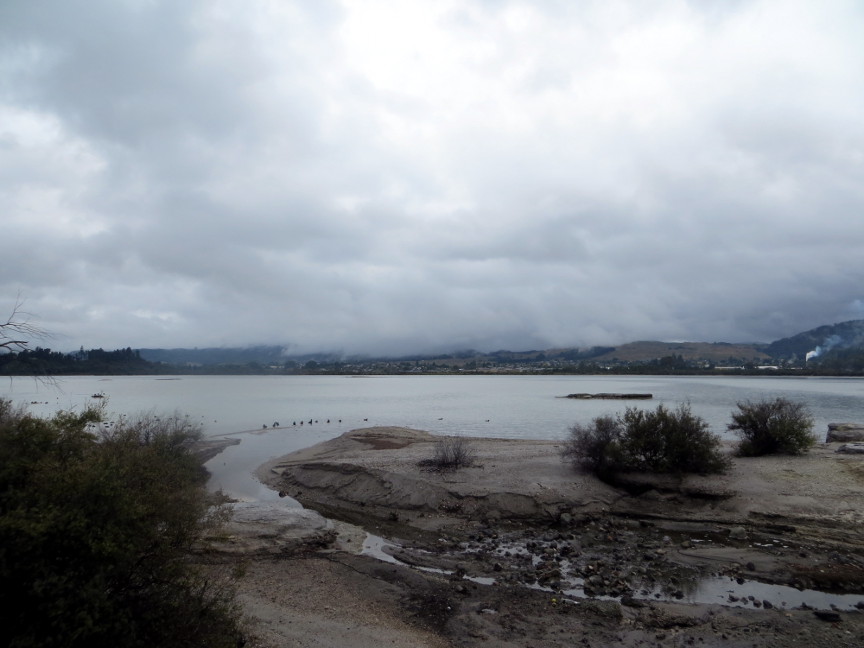
Back in Rotorua, we explore the Kuirau city park at the heart of the city. There are some mud pools and steaming vents right in the center of Rotorua. We drove out to Sulphur Point and looked out at Lake Rotorua. Like Lake Taupō, Lake Rotorua is actually a caldera of a massive volcano that has now filled with water.
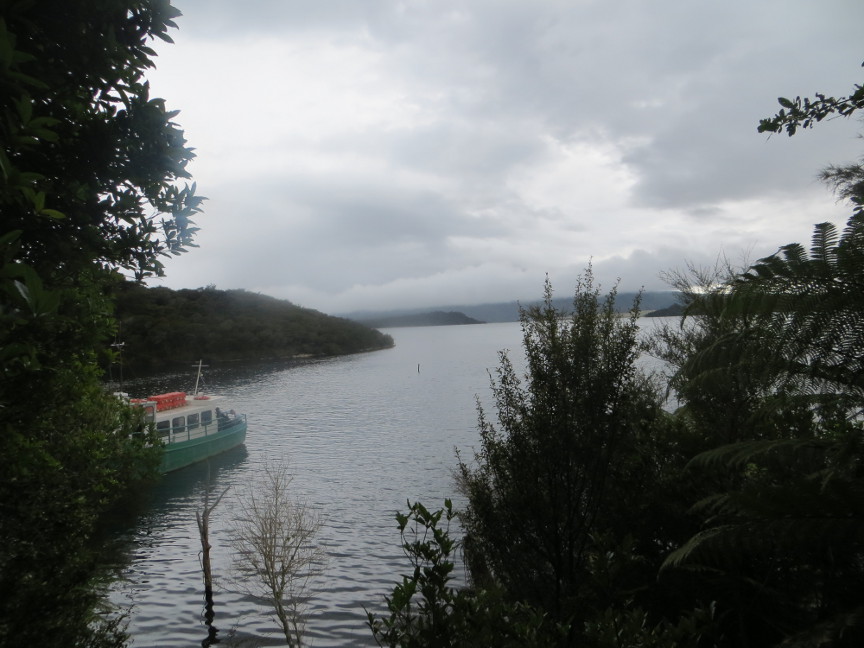
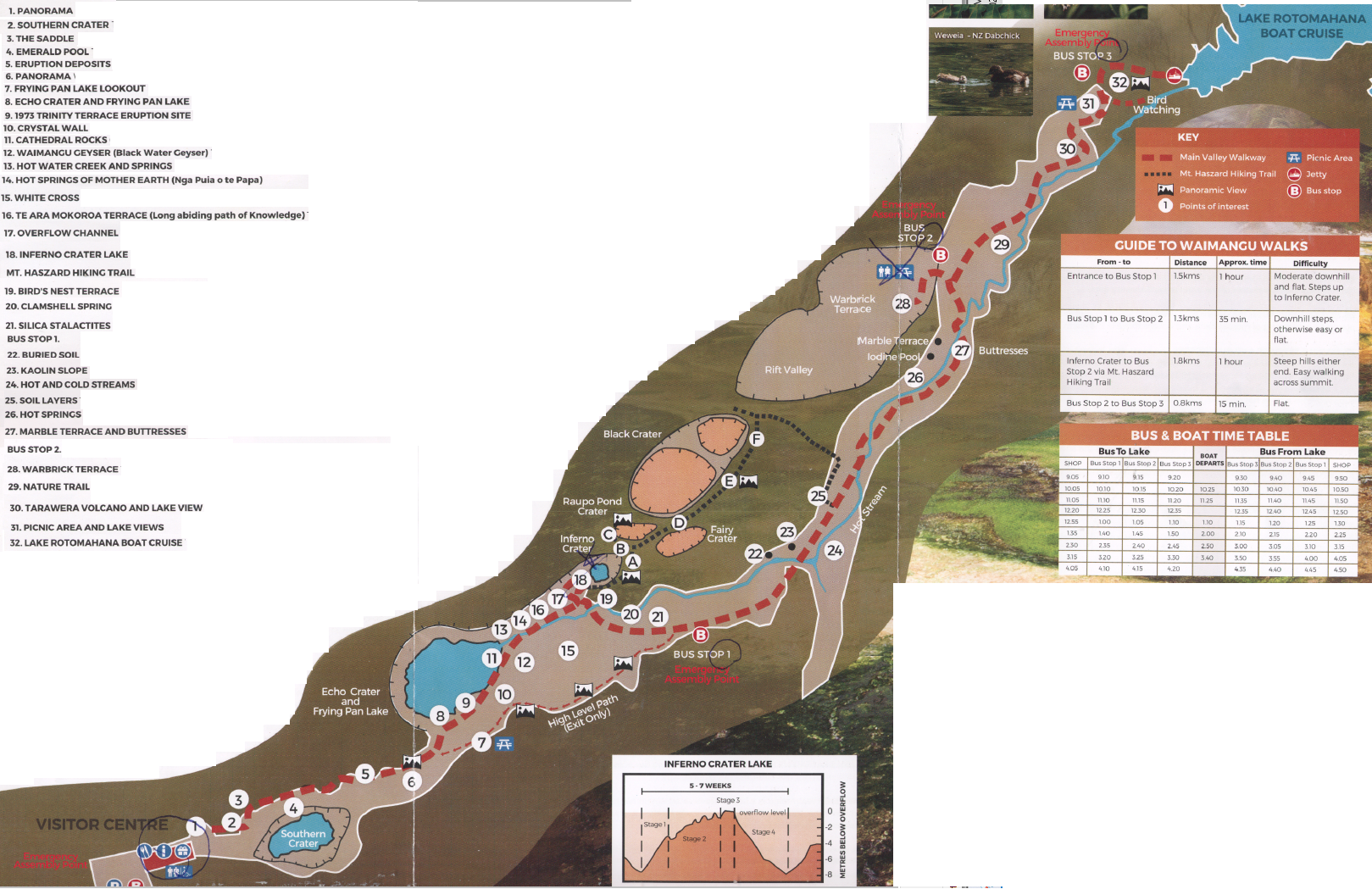
This is a copy of the site map we received at the entrance to the Waimangu Volcano Valley. We walked the route, all the way out to the boat dock on the shore of Lake Rotomahana where Waimangu Volcano Valley ends. It started to rain a bit as we waited at bus stop #3 for the ride back to the entrance.
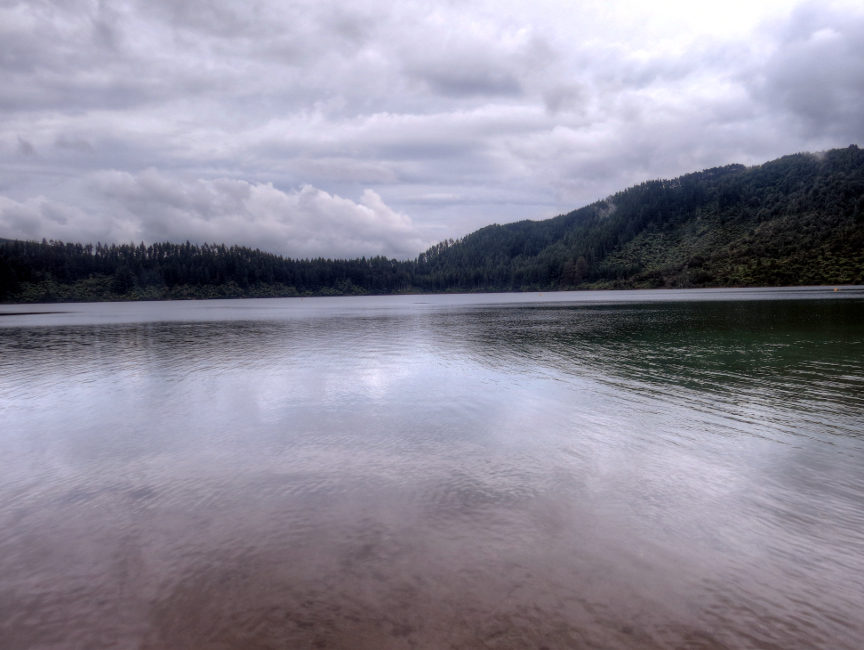
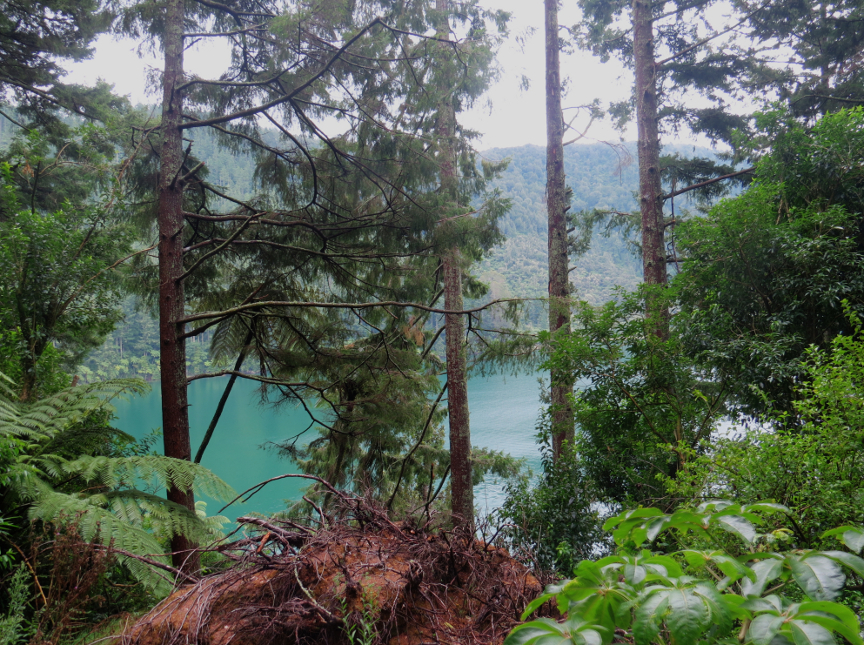
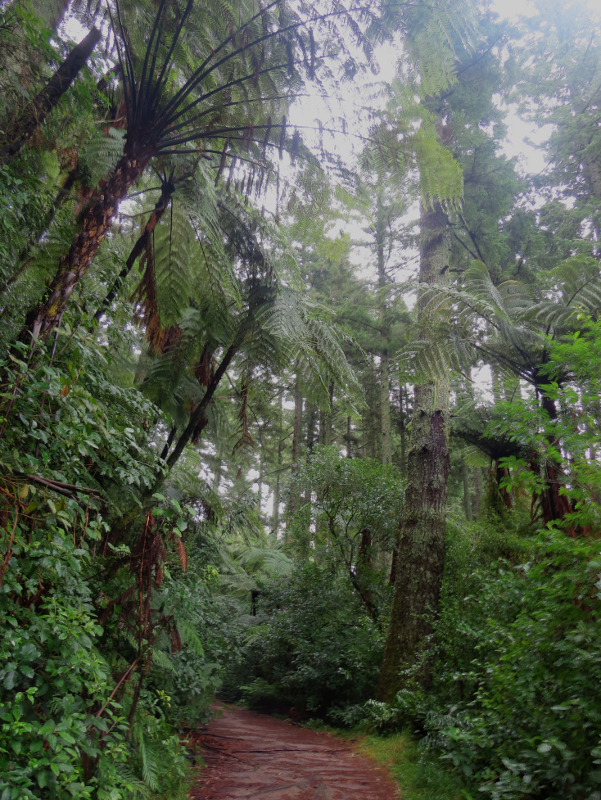
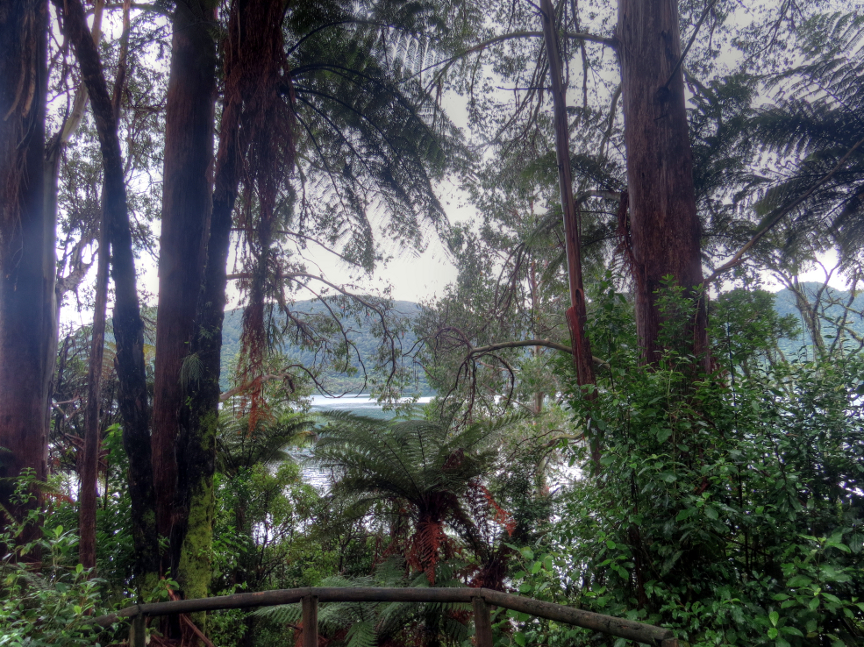
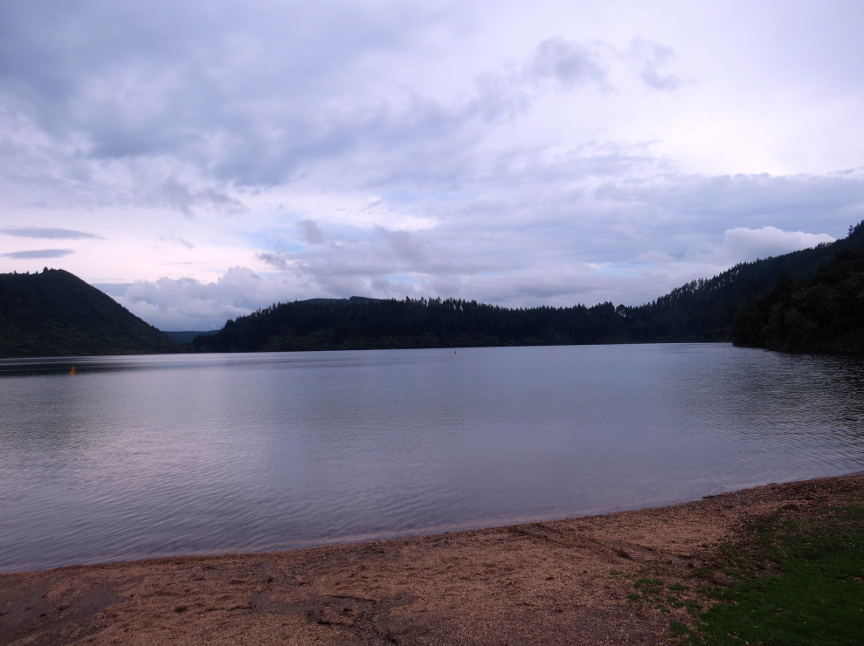
We also drove to the viewpoint near our Holiday Top 10 cabin that allows people to see both Green Lake and Blue Lake. There is a hiking trail that goes all the way around Blue Lake, but the sciatic nerve in Melanie's leg was really troubling her, so she opted to remain behind at the cabin while I did the hike myself. The hike is pretty easy. Rainclouds threatened, but I was dry all the way around the lake. The forecast for the next day was an entire day of rain, which meant that our plan to hike to the Pinnacles probably wasn't going to happen.