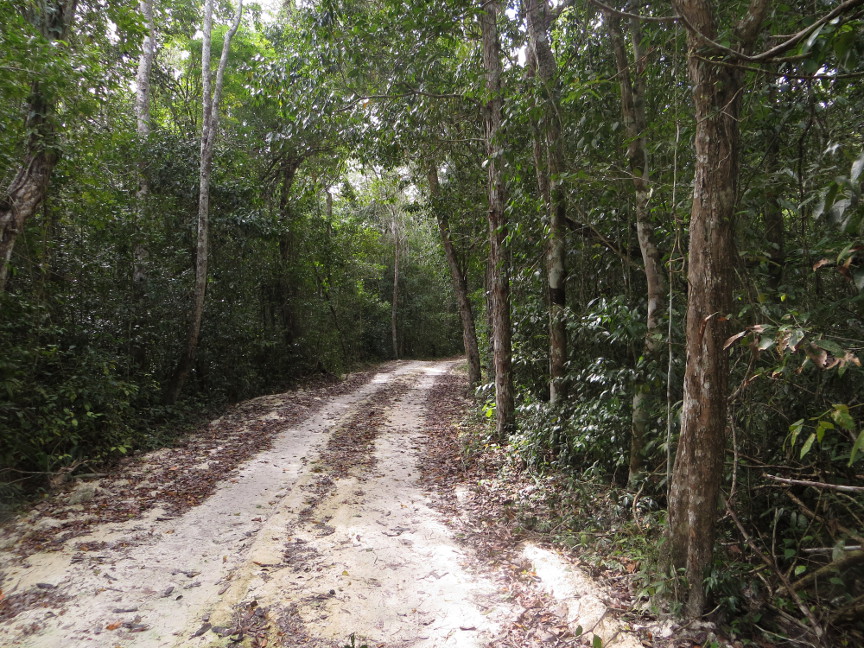
Hormiguero is at the end of an 8 KM bumpy road. It is no trouble reaching it with a rental car, though in the rainy season the drive might be more challenging. Of course, we had perfect weather.
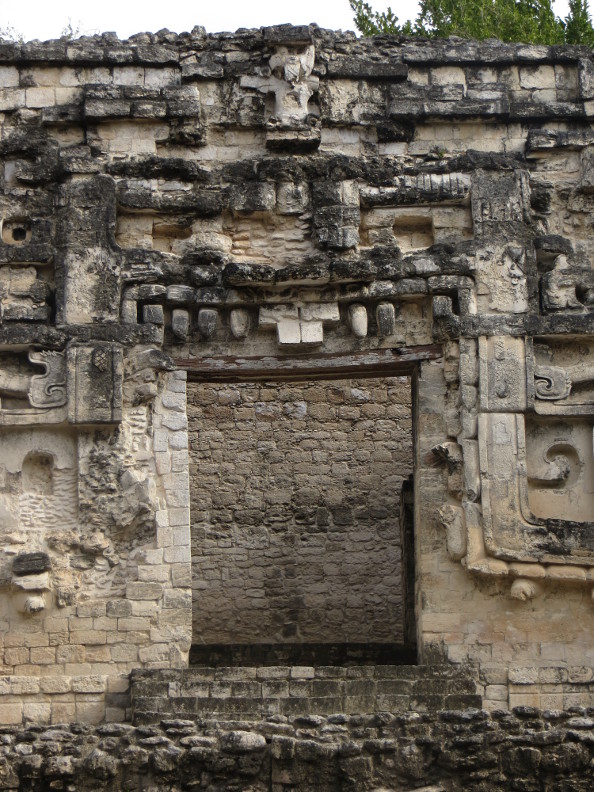
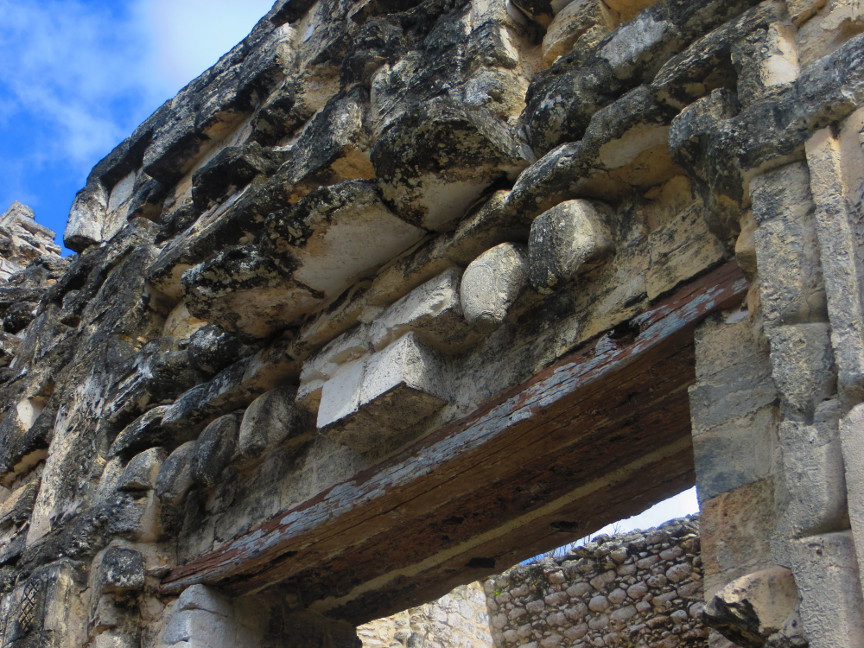
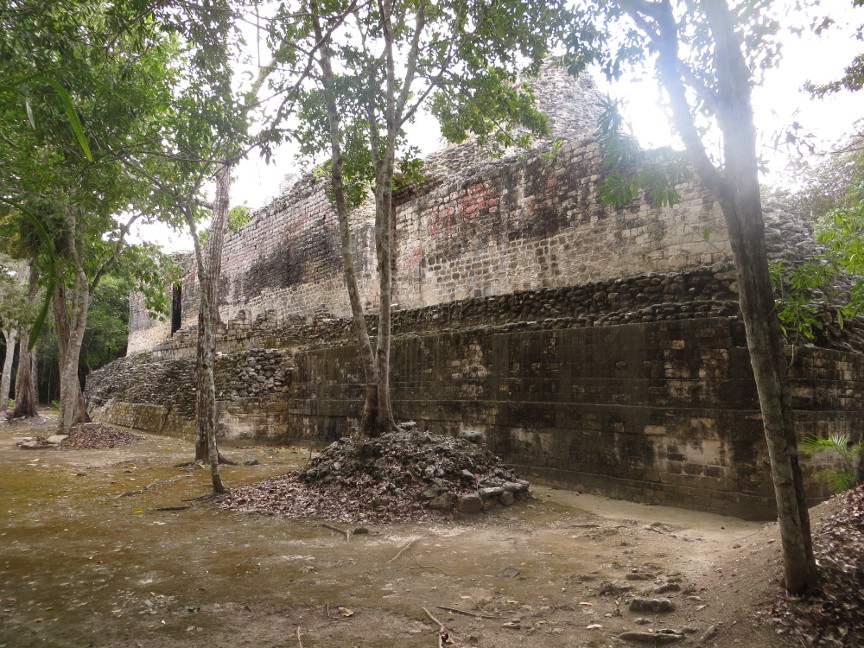
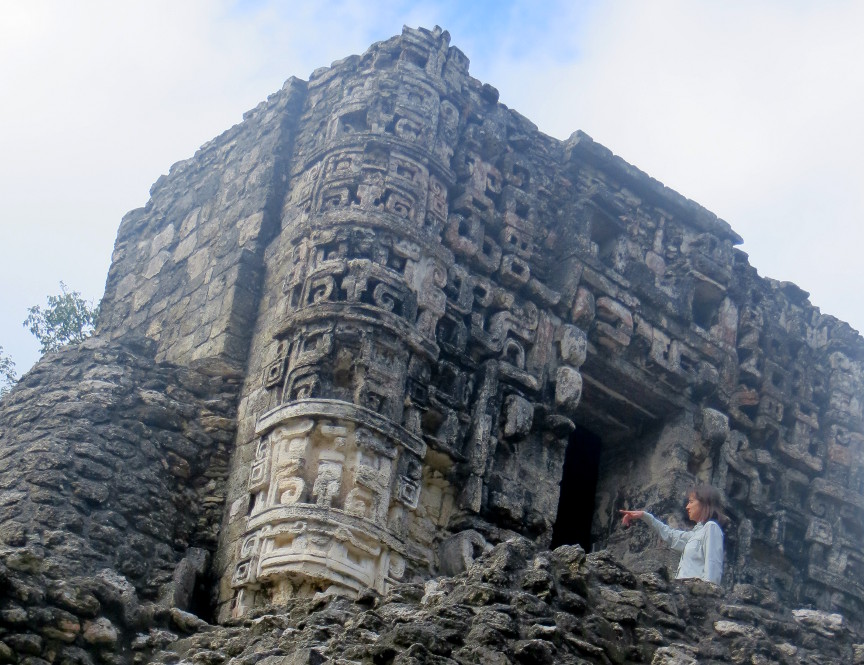
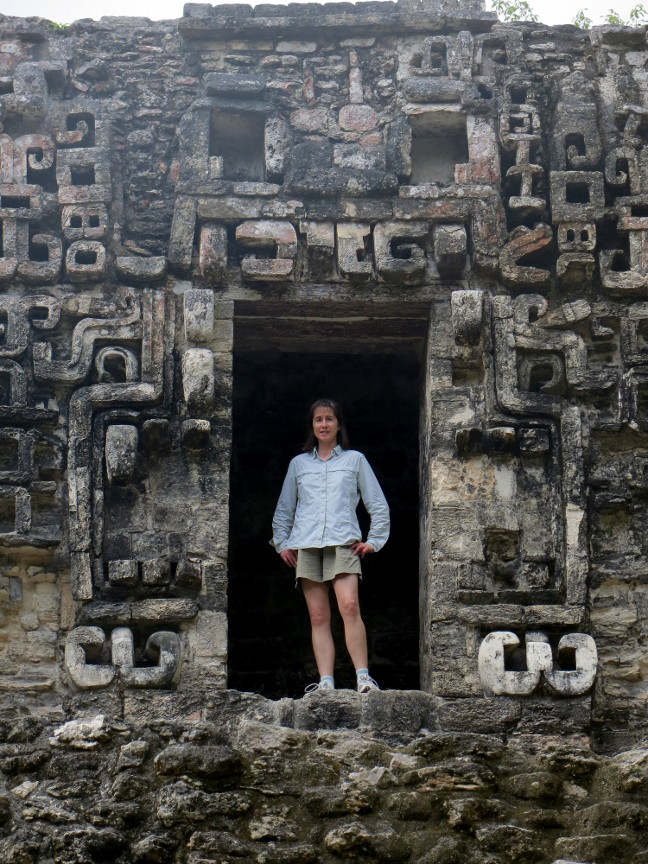
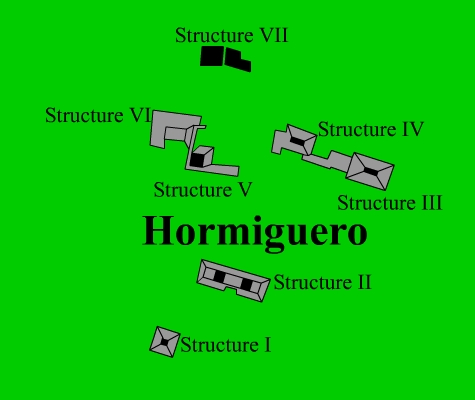
Perhaps because Hormiguero is not easily accessible, and it is not famous, there was no entrance fee. But it was still worth visiting. The map I found on line showed seven structures at Hormiguero, but there are really only two buildings to see - Structure II and Structure V. Both have impressive Monster Mask doorways and ornate carvings on their facade. Hormiguero means Ant Hill, the name was given by archaeologists due to large number of ants at the site. The original name of the city is not known.
Hormiguero was built using Mayan "Rio Bec" style architecture. It also includes elements of "Chenes" style architecture.
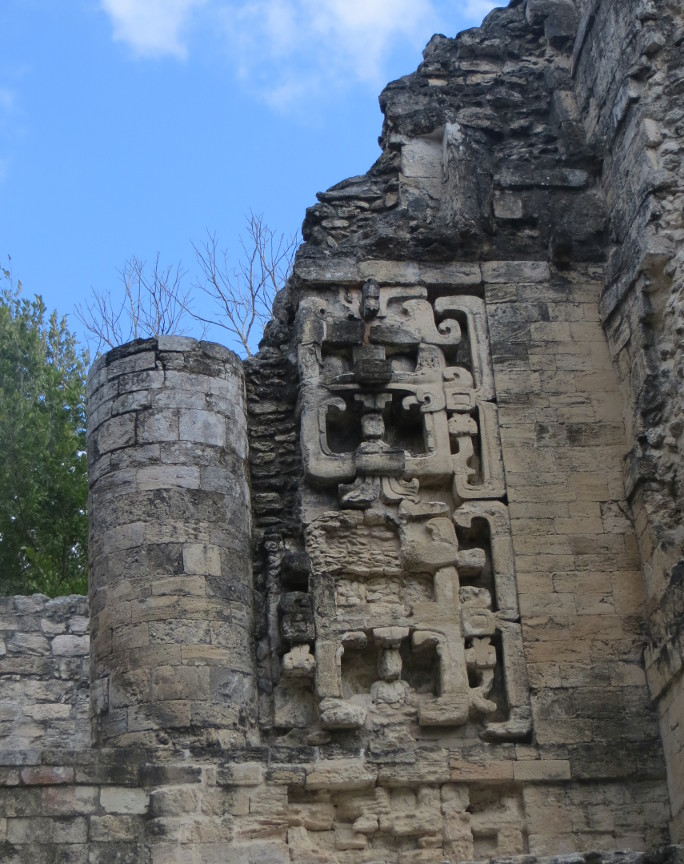
Rio Bec architecture has distinctive twin towers on its buildings. The towers are false - they are filled with rubble. On top of the towers may be temples (also filled with rock) that have false doors. Rio Bec facades have mosaics and Chenes style monster masks. The corners of Rio Bec buildings may be rounded.
Chenes architecture makes use of carved mosaic facades on both the upper and lower facades of the structure. The mosaic decorations took the form of spirals as well as distorted beings. Chenes style facades are typically one story high.
The most impressive feature of Chenes architecture is the practice of framing the doorway with a monster mask. The mask possibly represented a sky deity or mountain deity or Chac, the rain god. The open mouth of the mask represented the doorway to the underworld.







All the graphic images are my own design, but the textured background is taken from a site, EOS development, that offers non-profit users free use of their graphics. Click below to visit their site.


Single click on any thumbnail to open photo and begin slide show
Hormiguero