
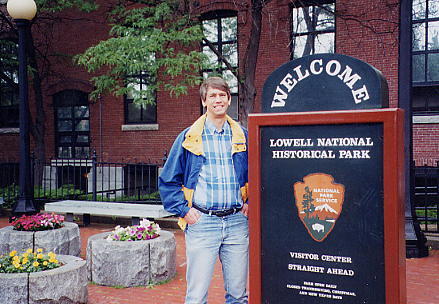
Lowell is a city that doesn't initially sound like it would be worth visiting - it is an industrial city that has long passed it golden years. But it is the birthsite of the American Industrial Revolution, and they have a visitor center that is informative. We spent most of the day there, going through the visitor center and the restored mill.
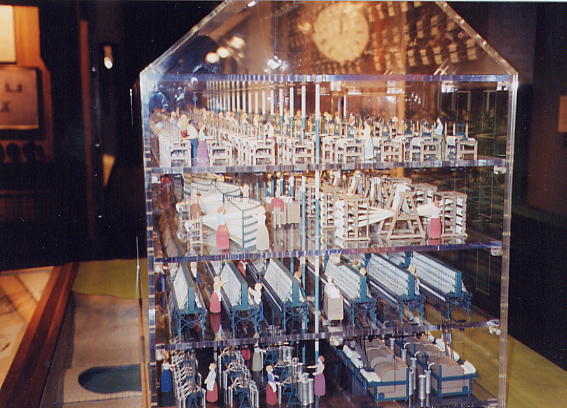
The first mill in Lowell was built by Francis Lowell, a wealthy man who went to England and observed how the English mills converted cotton into clothe. This act of industrial espionage allowed him to return to the states and build his own version. It was a large undertaking. The site was selected because water power was required to spin all the machinery that drove all the looms and other equipment. This meant canals, locks and dams had to be created to regulate the flow of water. The mill was built above water wheels that spun enormous shafts. The original plan was for cotton to be spun into thread on the lowest floor, and the looms to weave the cloth on the top floor, with each floor of the mill devoted to each step of the process. But the force of all the looms on the top floor cause the building to sway, so the looms were moved down to the second floor. The following photos are of a large model inside the mill, that shows each floor and the machinery. In the model, the looms are still shown on the top floor.

The first mill was built with the best of intentions. It employed young single women from the nearby farms who didn't have any work - the idea was the women would work at the factory for a few years, and then return home with some money and get married. Dormitories were built for the women (the first company town) and wages were good. The mill was wildly successful at creating cloth, and the women enjoyed independence and money that they never had before (though the rules at the dormitories were extraordinarly strict.) Lowell grew wealthy from his investment, and of course others soon copied his plan, and more and more cotton mills were built, the demand for cloth was insatiable. Although Massachutes was one of the strongest abolitionist states, it is sadly ironic that the mills in Massachutes created the huge demand for cotton that drove the southern states to rapidly increase their use of slaves. Further irony: Eli Whitney, who invented the cotton gin (a machine that rapidly remove cotton seeds from the fibers) was also a Massachutes native. The cotton mills grew quantity and capacity throughout the 19th century. But with competition, the evils of capitalism appeared. To increase profits, mill owners stopped paying good wages, and working conditions and hours grew longer and more abysmal. Immigrants laborers were brought in, a child labor. Unions appeared much later. Lowell was a boom town with the wealth from the mills, but it was a dirty industrial city.


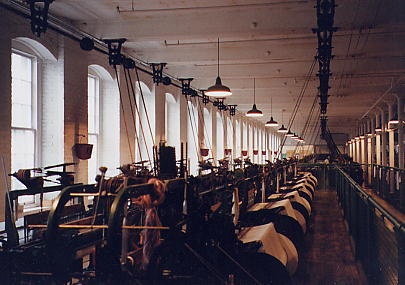
The one mill that is still standing today is used as a museum, it shows visitors where the American industrial revolution took place. We walked through the Boott Cotton Mills. They have restored the machinery, there is a whole floor full of looms. Only a few were running, but still earplugs were required. We spent almost an hour talking to a museum worker - in real life, she really is a worker at a modern day mill, one the very few that still remain on US soil. Her mill produces speciality fibers like burlap and canvas for fire hoses - niche materials that the offshore mills don't produce (yet). Inside the mill is row after row of looms, weaving back and forth to create the cloth. The factory worker was required to watch several looms to make sure the bobbins did not run out of thread, or the shuttle jam, or the thread break. It was noisy, hot and there was the threat of fire. It was dangerous too, with all the spinning machines, and high speed belts transferring power from the water wheel shafts. The factory was deliberately kept humid because that reduce thread breakage. Even with only a few looms running, we had to wear ear plugs. Unfortunately, my picture inside the factory is rather dark, but you can see the rows of looms. Note the belts that rise from each loom to the spinning shaft along the ceiling - this is how power was transferred to each machine. (not all the looms have their belts hooked up, not all the looms on display are operational)
The upper floor of the museum has exhibits that tell the story of the mills rise and fall. Now Lowell is pretty much an industrial town without a lot of jobs (just like a lot of other US cities where the manufacturing plants have fled to foreign shores.) We walked around the museum area, looking at the canals and the old trolley car museum. We wanted to get into the power plant museum, but it was closed. It was an interesting part of the trip, and I am glad we stopped there. The last picture is off Lowell's city hall, probably built during the city's wealthier era.


