


Title: |
Bea Wolf |
 |
Authors: |
Writer: Zach Weinersmith Illustrator: Boulet |
|
Category: |
Science Fiction / Fantasy |
|
Rating: |
||
Date Reviewed: |
July 1, 2023 |

Bea Wolf is a madcap retelling of the Old English epic saga of Beowulf. But instead of a hall full of feasting Vikings, this story is recast with bouncing six year olds, the mightiest of whom, of course, is a little girl named Bea Wolf. Bea Wolf is the story of a group of rowdy six year old tots. They build a marvelous tree fort and hold loud and raucous parties. These are not adult supervised affairs, instead the kids have a wild time with sugary snacks, comic books, video games and peals of outrageous laughter. It is kid paradise; unrestrained. Bedtimes? Homework? Chores? Not for this band of tots! In the lot next to the treehouse dwells a grumpy adult named Grindle. He knows no joy, his actuarial life is one of spreadsheets and mortgages. Grindle cannot stand the joyous noise that floats down from the tree house, disturbing him at any and all hours. Alas, Grindle has a super power - with the merest touch, he can transform a frenzied child into a sullen teenager, or, even worse, a dull and beaten-down adult. Grindle decides to put a stop to the children's frivolity, and so one fateful night he climbs the ladder up to the tree house - and standing there to confront him is Bea. Here are the lines from the initial confrontation between Grindle and Bea: She searched his spectacles, saw no fear. Only a vast joy-void, empty as a vacuum. His soul was a snowbank, unsledded, A snowcone unsweetened, a snowman unscarfed. In a lengthy afterward, Weinersmith describes the history of Beowulf, how the old English poem survived a precarious set of circumstances to be handed down through the ages. It was mostly ignored until an English scholar named J. R. R. Tolkein took an interest in it, and brought it to a wider audience. Today, Beowulf is considered a classic. Weinersmith gifts us with his own spin on the ancient tale. Highly recommended. 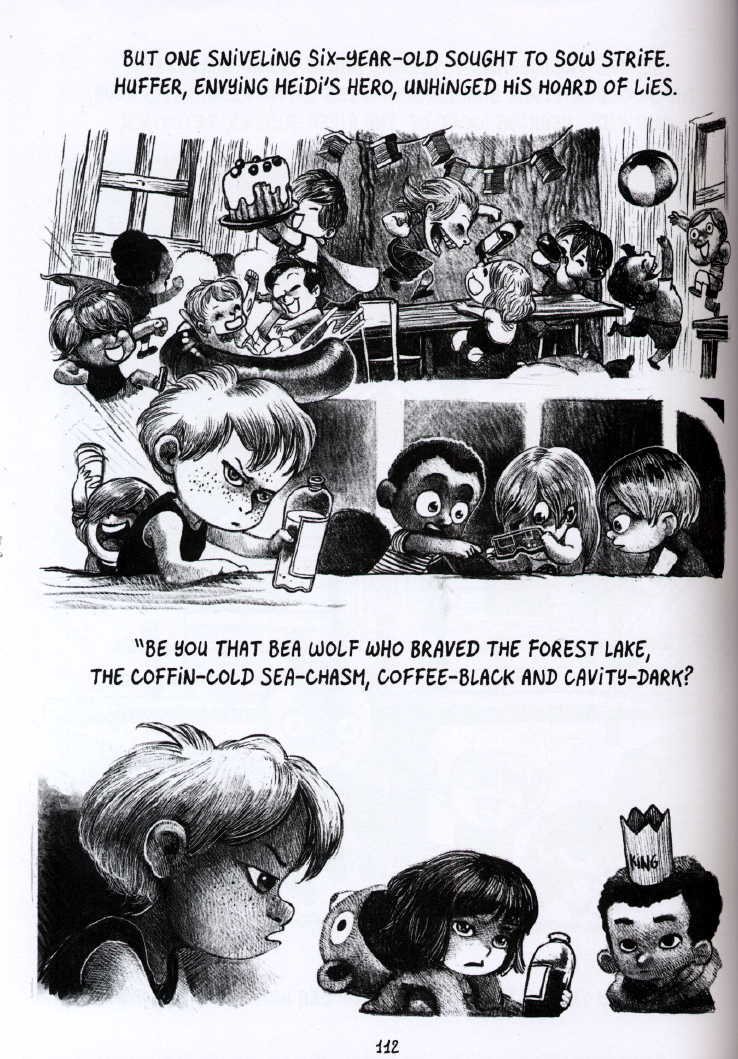 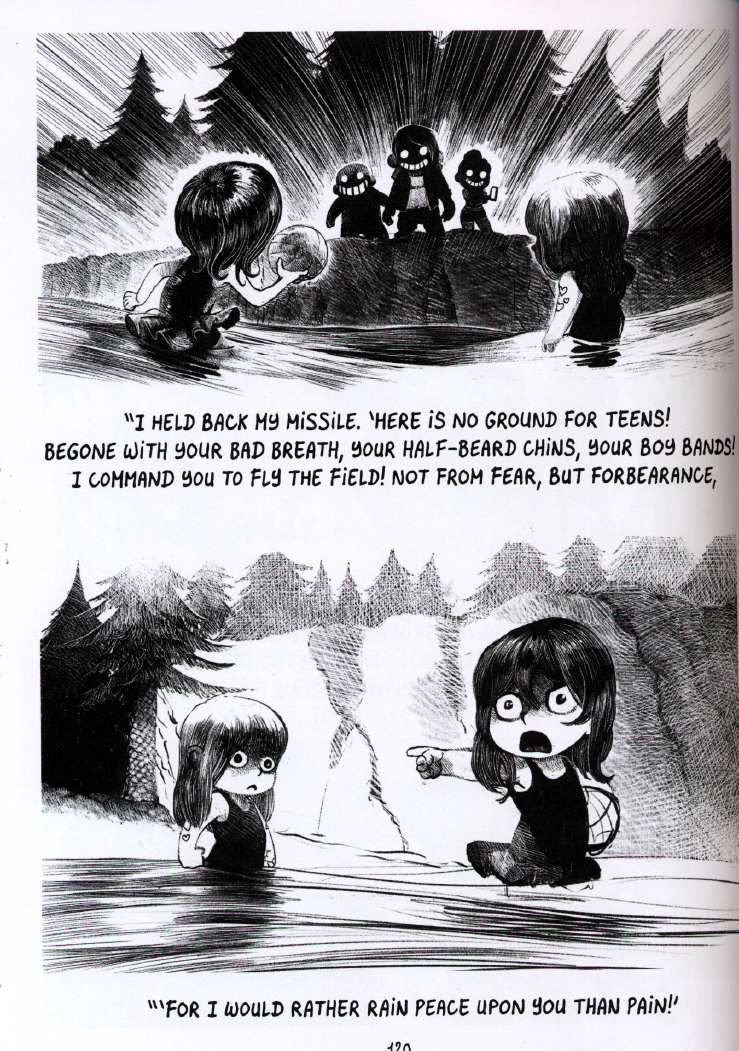 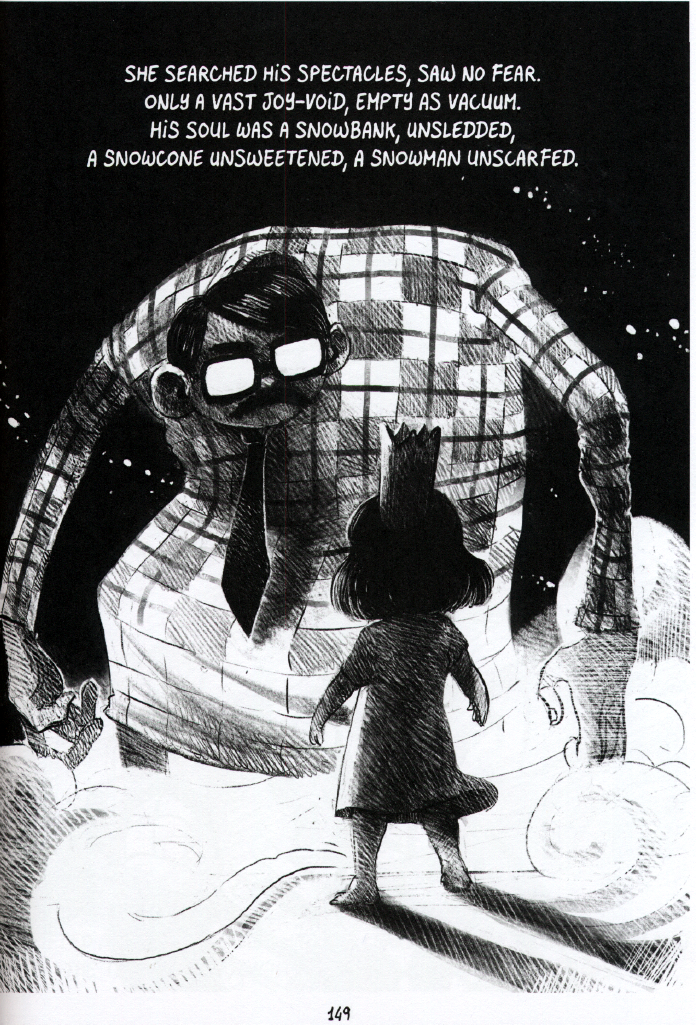
|
