


Title: |
The Shortest History of the Dinosaurs |
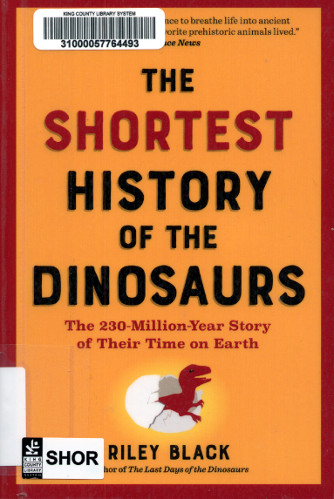 |
Author: |
Riley Black |
|
Category: |
Non-fiction |
|
Rating: |
||
Date Reviewed: |
October 16, 2025 |

There are twelve chapters in the book, covering various topics. I learned some dinosaur facts that were new to me. For example, the dinosaur strategy was to lay many eggs and hope that a few of the young would survive and grow to enormous-sized adulthood. Being huge was a protection from the carnivorous dinosaurs, which preyed on the juvenile dinosaurs (most of the dinosaur fossils we have are of adult dinosaurs because the young were eaten). A newly hatched dinosaur might be the size of chicken, and it would have to grow quickly to survive. Dinosaurs might gain 1000 pounds in a year. Mammals existed during the entirety of the reign of the dinosaurs, but because of their lower birth rate, they could not compete with the dinosaurs. This meant the mammals filled the ecological niche of small creatures which the dinosaurs did not occupy - rodents and burrowing animals. Although there has a been an ancient mammal fossil discovered that is relatively big, almost all prehistoric mammals were smaller than a badger. This meant that when the asteroid struck 66 million years ago, the small mammals survived the devastating destruction in their burrows while the bigger dinosaurs perished from a lack of food. The Shortest History of the Dinosaurs provides details of the asteroid strike that I had not read previously. The explosion kicked up so much particulates into the atmosphere that it became super-heated, rising to 500 degrees F around the planet. This resulted in spontaneous combustion of the forests; there were raging wildfires all around the planet. Smoke and ash blocked out the sun, resulting in a years-long lack of photosynthesizing plants to eat. 75% of species on land and in the seas perished. The horns and spikes on the herbivores like triceratops and stegosaurus might not have been used as defense against the meat eaters, but they were instead used in mating rituals and displays of dominance, much like the antlers on elk are used to battle rivals for mates rather than fending off panthers or wolves. Skulls of triceratops have been found with what look to be healed gashes caused by horns of other triceratops. I see that Riley Black has authored other books on dinosaurs, so maybe I should track down other publications that she has written. This one was pretty good. |
