


Title: |
Erebus |
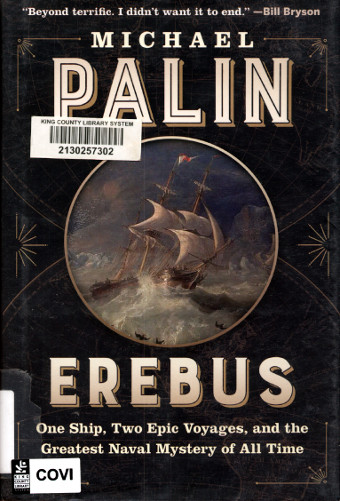 |
Author: |
Michael Palin |
|
Category: |
Non-fiction |
|
Rating: |
||
Date Reviewed: |
May 15, 2026 |

The Erebus actually made two polar voyages - in 1839, it embarked on a four-year voyage to Antarctica in search of
the location of the Magnetic South pole. Most of this book covers this first voyage simply because there is so much more known about the first trip rather than the more famous but
disastrous second voyage. Led by Captain John Ross
and accompanied by the Terror, the Erebus sailed to Tasmania (which was called Van Diemen's Land in those days). After gathering supplies, the two ships sailed
south to Antarctica. Although they ultimately went further south than any ship had sailed before, thick ice prevented the explorers from reaching the Magnetic South pole.
The two ships returned to Tasmania, resupplied, and embarked on a second voyage the next year. After another layover on desolate Ascension Island,
a third voyage was made into the Antarctic but, as ever, they were turned back by thick ice. There is one particularly harrowing story about how the two ships managed to sail through
a narrow channel between a long line of towering icebergs. If they had not escaped through that gap, they would have been trapped, and the mysterious disappearance of the Erebus
and Terror might have been known as the Ross expedition famously lost in the Antarctic rather than the Franklin expedition lost in the Arctic. Polar exploration was a hazardous
endeavor; it is no wonder so many voyages came to grief.
Although the Ross expedition failed to reach the Magnetic South pole, the voyagers returned to England and received honors and glory. But the success
stirred up a desire for further exploration, and the goal of discovering the long-sought Northwest Passage received a lot of support. Plans were made, funds were gathered, a crew
was collected and John Franklin was appointed as captain. Enough supplies to last three years were loaded onto the Terror and Erebus; space on board was limited due to the
huge amount of material brought along. The two ships were escorted to the coast of Greenland and then they sailed off into the Arctic and were never heard from again.
It took a few years for the alarm to be raised, but eventually an astounding amount of effort was put into finding and rescuing the men of the missing expedition. But despite these
heroic attempts, the fate of the two ships remained unknown. The Inuit spoke of seeing men still alive up to four years after the ships became trapped in the ice, but no one was found alive.
Both sunken wrecks have now been discovered. It seems that the crews survived for three years, trapped in the ice, before finally attempting to escape
It appears that they left the ships dragging heavy boats behind them to use as sleds, perhaps thinking that when they reached water they would sail across. However, they headed south
rather than east. The escape attempt failed completely, and everyone perished. Why did the survivors act so irrationally? There is plenty of speculation about why they made such bad decisions.
Big amounts of lead poisoning was found in their bodies - was it due to the lead solder used to seal their tinned food? Was it due to the lead lined boiler that they used to melt
ice for drinking water? Maybe they were all so weak because they were suffering from scurvy - the lemon juice that they brought would have broken down after three years. Maybe there was
botulism in their canned food? Although both shipwrecks have been found, none of the logbooks were ever recovered and so there is no answers as to what the officers and crew were thinking.
Michael Palin visited many of the sites visited by the Erebus. He flew or sailed to remote islands in the Antarctic and Arctic so that he could try to
experience what the men on the Erebus witnessed. Even though Palin is a comedian, this actually a well-researched and well-written book.
|
