Title: |
The D'Aulaires' Book of Greek Myths |
 |
Author: |
Ingri and Edgar D'Aulaires |
|
Category: |
Fiction |
|
Rating: |
||
Date Reviewed: |
December 20, 2023 |

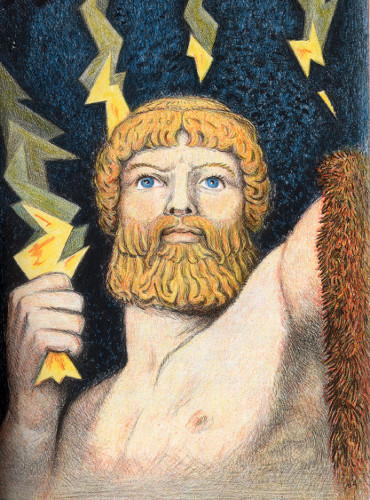
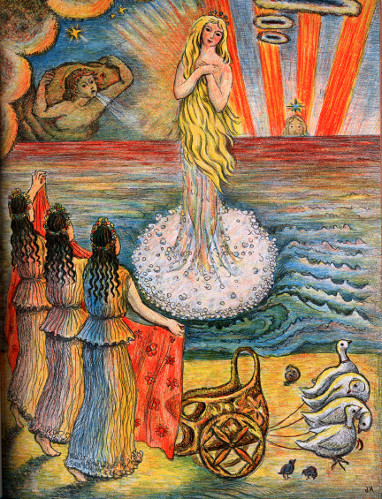
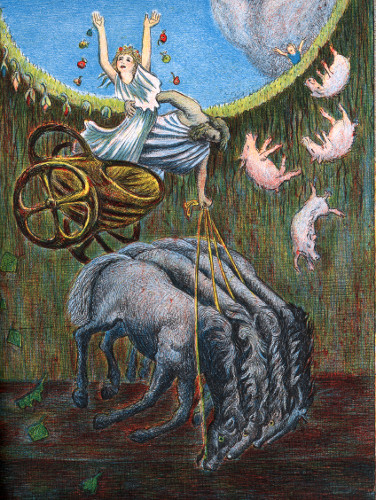
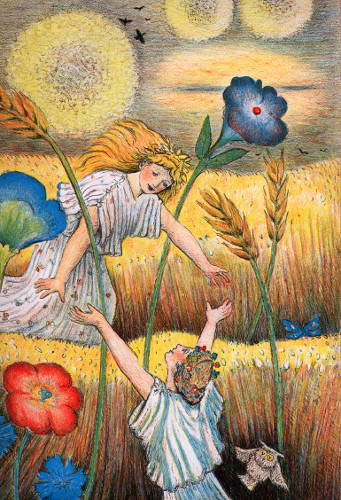
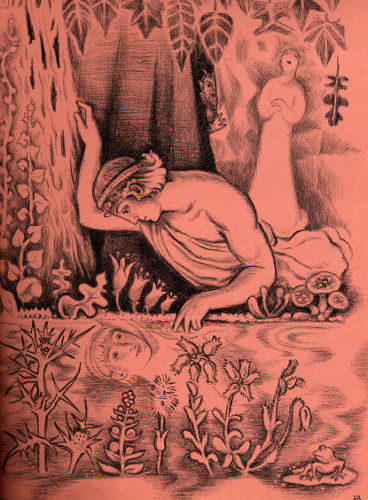
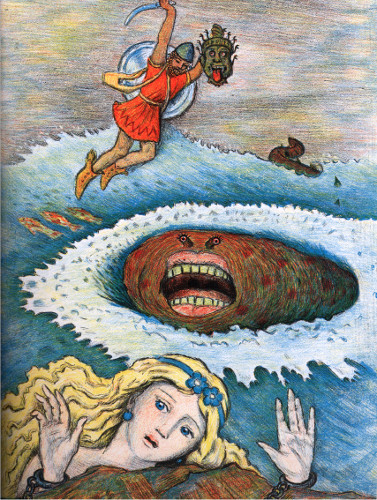
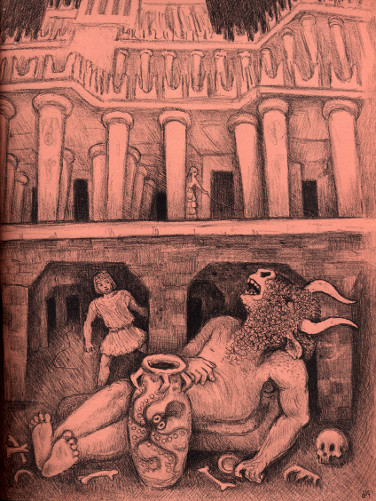
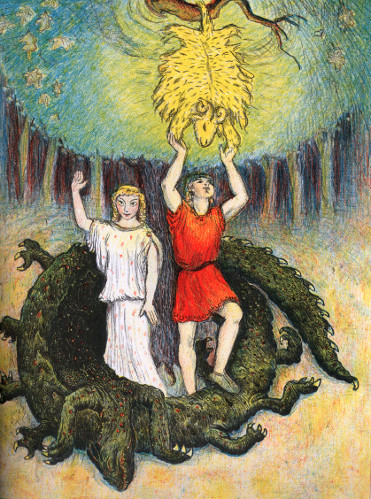
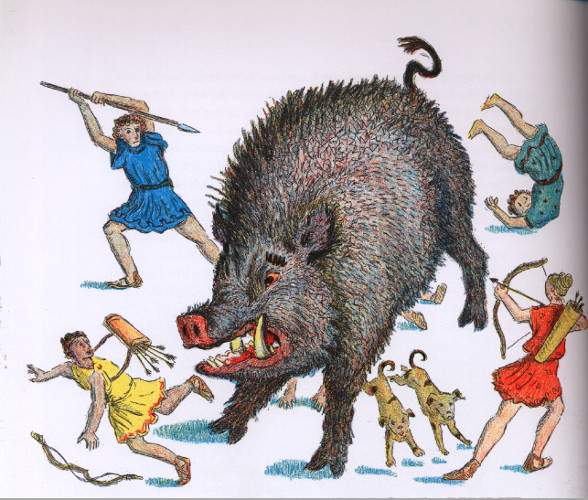
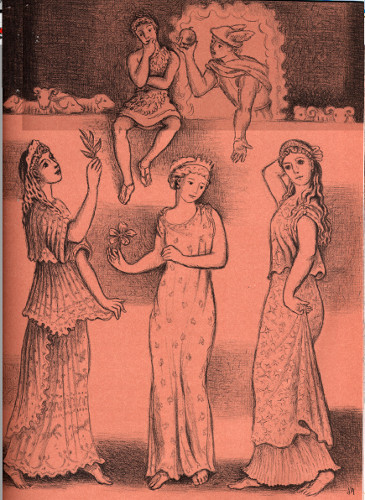
When I read this book as a child, I thought that the drawings were amazing (this book is profusely illustrated. Some of the best artwork
fills an entire page). But when I look at the art now, some pictures seem almost unfinished, not nearly as polished as I expected. This edition from the library
(if I am reading the small type on the fronts-piece correctly, the book is now in its 70th printing - the original copyright is 1962.) has an afterward describing
how long the D'Aulaires labored on this
book. I sounds like it was a years-long project to write and illustrate. Yet the myths are told in a fairly straight-forward manner, without any embellishment. This
happened, then that happened, followed by that. The myths are stripped down to the barest bones of storytelling, but without dumbing them down. (Since it is a book for
children, rape isn't mentioned. Instead women are carried off to be brides.)
Many of these myths tell of a boastful human that compares themselves to one of the Olympians. This of course angers that particular god, and
soon leads to a confrontation and the inevitable downfall of the prideful mortal. Many other myths tell of the gods quarreling between themselves. Zeus is always spying
a beautiful mortal woman and descending to Earth to seduce her in one guise or another. Zeus' wife, Hera, then tries to exact revenge for Zeus' two-timing by unleashing her
anger upon the poor woman.
Presumably many of these myths originated because the Greeks trying to find an explanation for natural phenomena. Why does the earth sometimes shake? Because the titans
trapped below are restless. Why do we have seasons? Because Persephone, the daughter of Demeter (the goddess of the harvest) is forced to spend half the year underground in
the land of the dead, acting as the bride of Hades. When Persephone is released each year from her forced marriage, Demeter is overjoyed to get her daughter back, and spring
comes to earth. When Poseidon, the mighty god of seas, is angry, he strikes out with his trident and the result is storms and huge waves.
All of the famous Greek legends are described: Narcissus, Hercules, Theseus, Icarus, Prometheus, etc. Because the D'Ailuries myth-telling style is so succinct,
all of this material is covered in just 190 pages (and many of those pages are filled with art). Yes, some characters suffer gruesome fates (Prometheus is chained to a rock, and each
day an eagle swoops in and eats his liver, but since Prometheus is immortal, each night his liver grows back), but the tales are told in such a matter-of-fact presentation that
they are not too scary for kids. I first read this book at young age and delighted in the myths. Most of my knowledge of Greek mythology still comes from this book (and my understanding
of the Norse gods comes from the companion volume from the D'Ailuries). I assume most kids would be delighted by these magical, timeless stories. It's too bad that there are not
more companion volumes - I would love to learn about Mayan, Indian, Japanese, and Egyptian myths. |