


Title: |
Dante's Inferno |
 |
Illustrators: |
Paul & Gaëtan Brizzi |
|
Category: |
Literature |
|
Rating: |
||
Date Reviewed: |
June 11, 2025 |

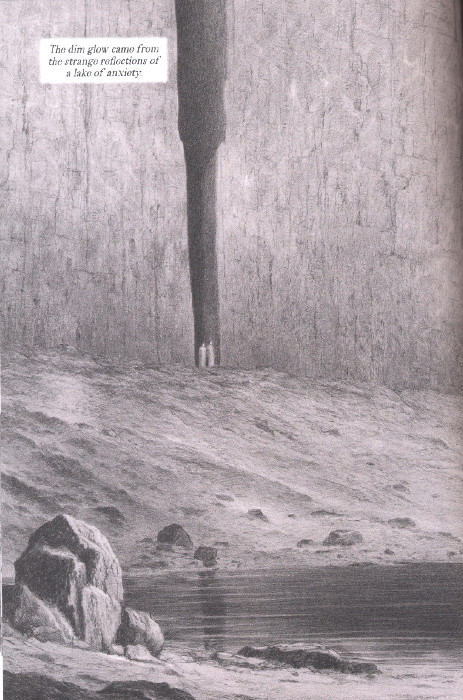
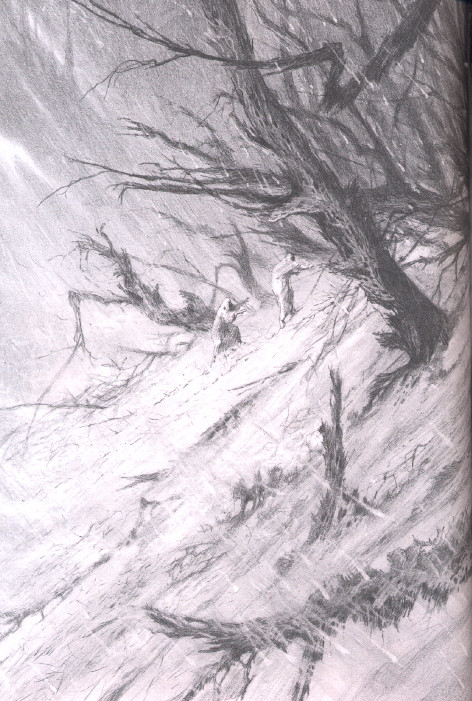
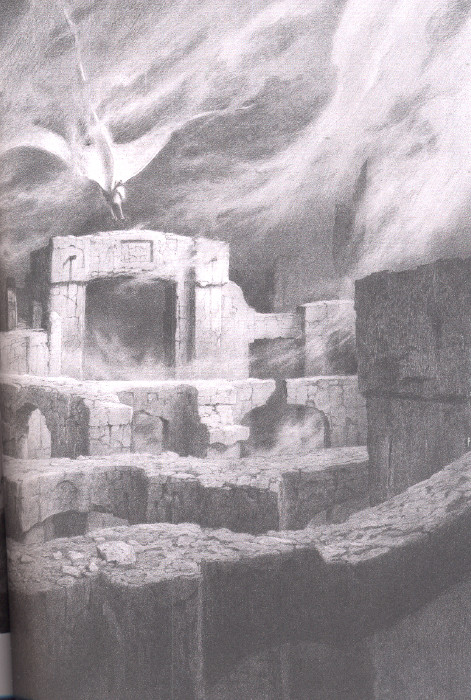
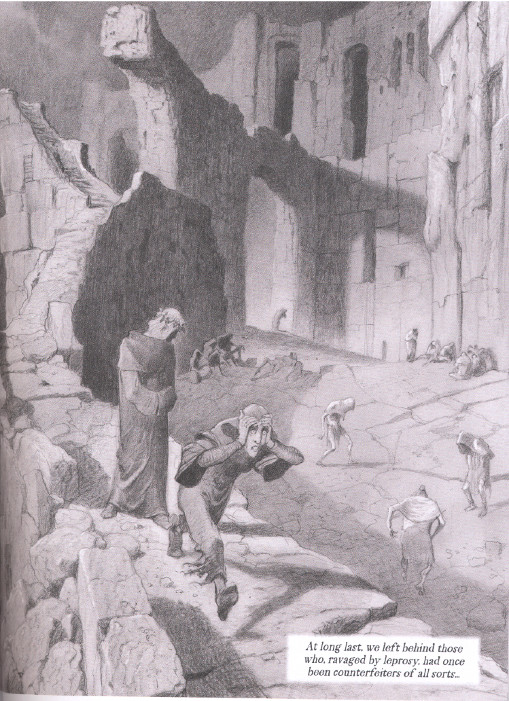
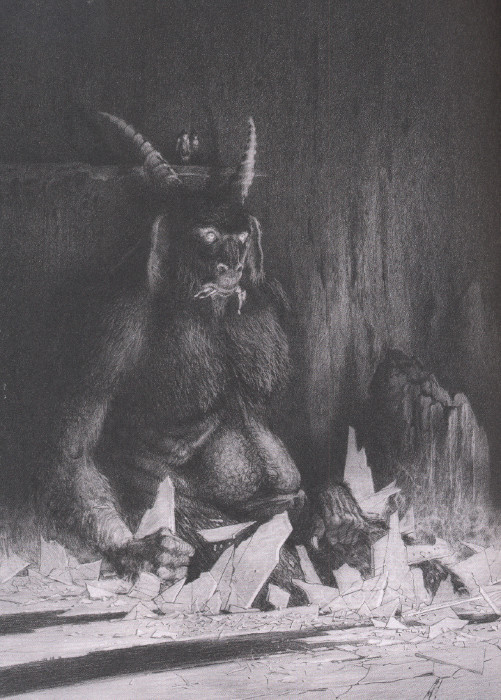
The artwork is all black and white pencil drawings. Many are full page. There are no hard lines to create sharp edges, every image is carefully rendered with shaded pencils. A lot of effort went into each panel - just look at the art on the cover, which shows hundreds of human bodies locking in a seething whirlwind - this is a depiction of the second circle of hell, where people who were consumed with lust during life now grapple with each other through all eternity as powerful winds sweep them through the sky. It must have taken a long time to create this book. The great artist Gustav Doré produced a set of excellent woodblocks illustrating Inferno in the 19th century. Clearly the Brizzi brothers pay tribute to Doré's work - their depiction of Dante and Virgil is quite similar to Doré's creation, including wearing the same costumes. Virgil is shown with a crown of laurel leaves around his head. There are only two characters in Inferno - Dante and his guide Virgil. Other famous personalities make short appearances, including the devil himself. It isn't explained why
Dante must traverse hell and purgatory before reaching heaven - do all the saintly deceased have to follow the same route instead of going straight to heaven? There
is no sign of St Peter and the judgement book directing souls either to bliss or damnation - maybe that idea of a final judgement before the pearly gates is a later addition to the
afterlife. Dante wrote this book back in the fourteenth century. (Dante wrote Inferno in the Italian language, rather than Latin which was until then still the language of the
scholars and poets.)
This is book is nicely done. Well worth checking out of the library. Makes me interested in what else the Brizzi's have illustrated. 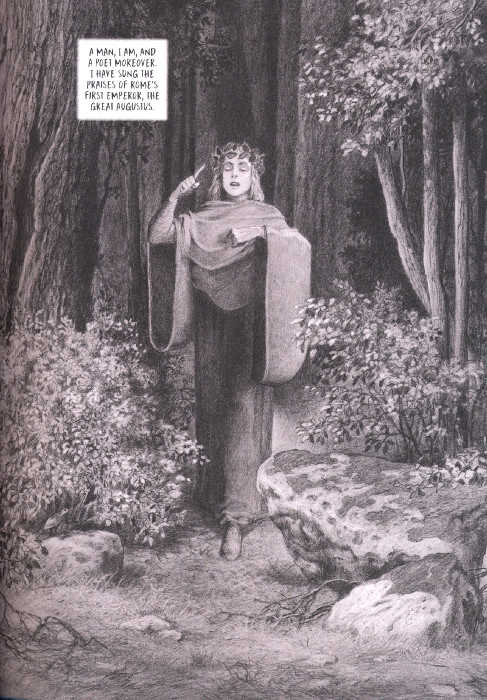 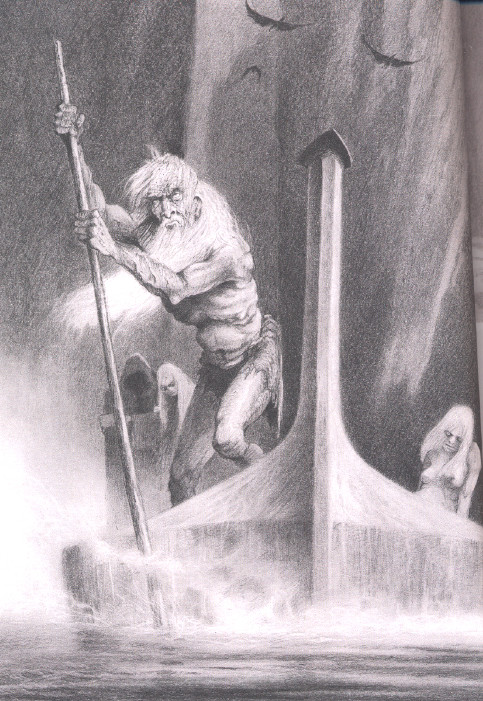 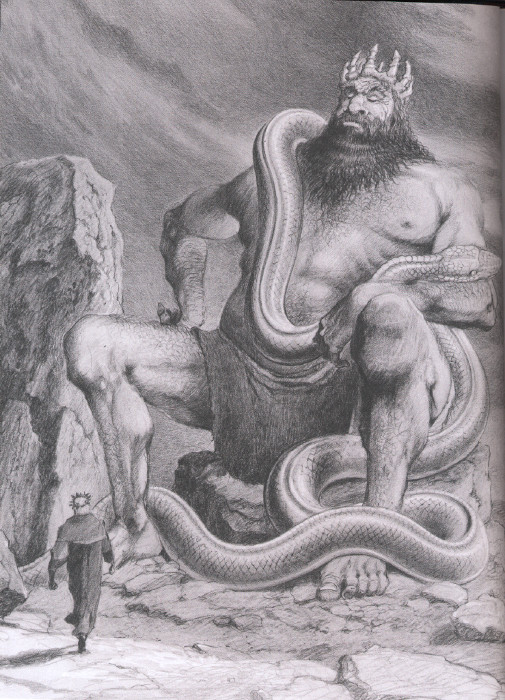 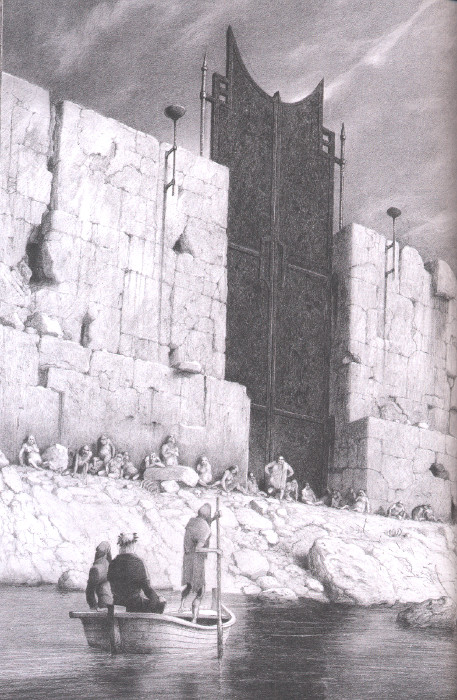 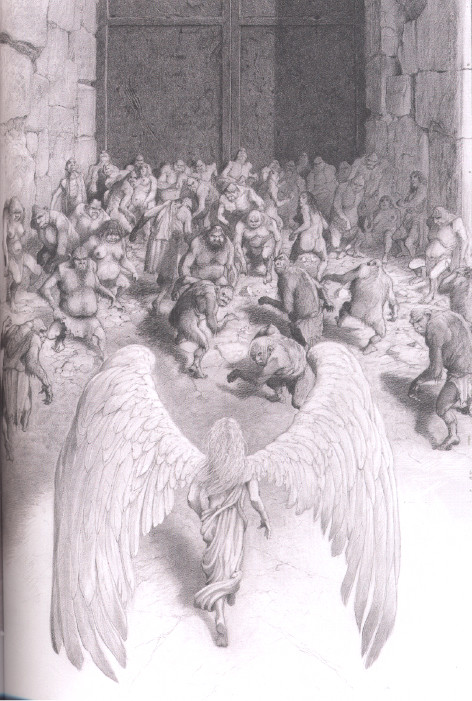
|
